Can a Short Sale Stop or Delay Foreclosure?

A short sale does not automatically stop foreclosure. Listing your home for sale, receiving an offer, or submitting a short sale package to your mortgage lender does not necessarily pause foreclosure proceedings. However, a short sale may help delay or prevent foreclosure in certain circumstances if the mortgage servicer agrees to postpone scheduled actions while reviewing the transaction.
The most important factor is timing. Homeowners need to understand their foreclosure deadlines, communicate with their mortgage servicer, and confirm in writing whether any scheduled foreclosure activity has been postponed.
If you are considering a short sale because you owe more on your mortgage than your home is worth, taking action early may give you more options.
What Is a Short Sale in a Foreclosure Situation?
A short sale happens when a homeowner sells a property for less than the outstanding mortgage balance, and the mortgage lender or servicer agrees to accept the proceeds under approved terms.
For example, imagine:
Your remaining mortgage balance is $250,000.
Your home's current market value is $215,000.
You receive an offer for $210,000.
Your lender reviews the proposed sale and determines whether to accept the offer.
Because the sale proceeds would not cover the full mortgage balance, lender approval is generally necessary.
For homeowners experiencing financial hardship, a short sale may provide an alternative to allowing the foreclosure process to continue.
However, a short sale and a foreclosure are separate processes. Starting one does not automatically stop the other.
Does Starting a Short Sale Automatically Pause Foreclosure?
No. One of the biggest misunderstandings homeowners have is assuming that starting a short sale process puts foreclosure on hold.
There are several steps involved in a short sale, and none should be confused with an automatic foreclosure suspension.
Action taken | Does it automatically stop foreclosure? |
Contacting a real estate agent | No |
Listing the property for sale | No |
Receiving an offer from a buyer | No |
Submitting a short sale package | No |
Having the lender review the package | Not necessarily |
Receiving written short sale approval | May allow the foreclosure sale to be postponed, subject to applicable rules and conditions |
Completing an approved short sale | Can resolve the mortgage through the approved transaction |
Fannie Mae's servicing guidelines specifically require servicers to explain that listing a property for a short sale may not delay the start of foreclosure proceedings. Its guidelines also provide for suspending a foreclosure sale after an offer has been approved, subject to applicable requirements.
Servicing Guide+1
The important takeaway: Never assume your foreclosure is on hold just because your home is listed or your short sale documents have been submitted.
How Can a Short Sale Delay Foreclosure?
Although a short sale does not automatically stop foreclosure, it may create an opportunity to postpone certain foreclosure actions.
This generally depends on the mortgage servicer, the loan's investor requirements, the stage of foreclosure, and applicable consumer protection rules.
Here are three ways a short sale may affect the foreclosure timeline.
1. The Mortgage Servicer May Agree to Postpone a Foreclosure Sale
If your lender determines that you qualify for a short sale and approves an acceptable buyer's offer, it may suspend or postpone a scheduled foreclosure sale to allow the transaction to close.
For example, a homeowner may already have a foreclosure sale date approaching when a qualified buyer submits an offer.
If the servicer approves the short sale, it may coordinate with the foreclosure department to postpone the sale while the transaction moves toward closing.
However, homeowners should request written confirmation of any postponement rather than relying on verbal assurances.
2. Federal Loss Mitigation Rules May Provide Certain Protections
Federal mortgage servicing rules provide some foreclosure protections when homeowners submit complete applications for loss mitigation assistance.
Under the Consumer Financial Protection Bureau's Regulation X, a mortgage servicer generally cannot conduct a foreclosure sale when it receives a complete loss mitigation application more than 37 days before the scheduled foreclosure sale, subject to the rule's requirements and exceptions.
This protection is not a blanket guarantee that every short sale submission will stop foreclosure. The application must meet the applicable requirements, and the timing matters.
If the application arrives 37 days or fewer before the scheduled sale, these particular federal restrictions generally do not require the servicer to suspend the sale. Other protections may still apply.
You can review the CFPB's official foreclosure protections in Regulation X, Section 1024.41.
Consumer Financial Protection Bureau
3. An Approved Short Sale May Provide Time to Complete the Transaction
Once the lender approves a short sale offer, the homeowner and buyer can work toward completing the transaction within the lender's approval period.
This may involve:
Completing buyer financing requirements.
Scheduling inspections and appraisals.
Resolving title or lien issues.
Coordinating with the closing company.
Obtaining any additional lender-required documents.
If the foreclosure sale has been postponed, the parties can use the approved timeline to work toward closing.
However, approval letters often contain expiration dates and conditions. If the transaction cannot close on time, an extension may need to be requested and approved.
What Happens If Foreclosure Has Already Started?
A short sale may still be possible after foreclosure proceedings begin.
The important question is not simply whether foreclosure has started. It is how far the foreclosure process has progressed and whether there is enough time to obtain approval and complete the sale.
Consider these general stages:
Missed mortgage payments
The homeowner falls behind on payments and begins receiving notices from the mortgage servicer.
Opportunity to explore options early
Foreclosure proceedings begin
Legal notices or required foreclosure filings may be issued, depending on the applicable process.
Time becomes more important
Foreclosure sale is scheduled
A specific sale date may be established. A short sale request at this stage requires immediate attention.
Urgent timeline review
Foreclosure sale takes place
The property may be sold through the foreclosure process. Options can become significantly more limited.
Seek immediate legal guidance
These stages are general examples, not a universal foreclosure schedule. The process and available options vary depending on the property location, loan terms, mortgage servicer, and applicable law.
HUD also emphasizes that foreclosure timelines vary by state and mortgage company, making it important to get assistance as early as possible.
HUD+1
Important: If you already have a scheduled foreclosure sale date, do not wait for a buyer's offer or a short sale approval before addressing that deadline.
What Should Homeowners Do to Protect Their Timeline?
If you are considering a short sale while facing foreclosure, taking organized and timely action can help prevent unnecessary delays.
Here are five practical steps to consider.
Step 1: Find Out Your Exact Foreclosure Status
Contact your mortgage servicer and ask:
Has foreclosure officially started?
Has a foreclosure sale date been scheduled?
What is the exact deadline for taking action?
Is the foreclosure process currently active?
Do not rely on estimates. Request the dates in writing whenever possible.
Step 2: Contact the Mortgage Servicer's Loss Mitigation Department
Ask to speak directly with the department responsible for reviewing short sales and other foreclosure alternatives.
Explain your financial hardship and that you want to explore a short sale.
Ask whether the servicer has specific requirements for submitting a short sale request and whether any foreclosure activity can be postponed during the review.
Step 3: Prepare Your Short Sale Documents
Having the necessary documents ready can help reduce avoidable processing delays.
Commonly requested documents include:
Recent mortgage statements.
Proof of income or unemployment.
Recent bank statements.
Monthly expense information.
Financial hardship letter.
Property listing information.
Purchase offer, when available.
Additional documents requested by the mortgage servicer.
Requirements vary by lender and loan program.
Step 4: Work With a Real Estate Professional Experienced in Short Sales
A short sale involves more than finding a buyer.
An experienced real estate professional can help coordinate the listing, communicate with the buyer, organize the purchase offer, and work with the lender's short sale department.
Look for someone who understands the importance of foreclosure deadlines and knows how to coordinate with the other professionals involved.
Step 5: Confirm Any Foreclosure Postponement in Writing
This is one of the most important steps.
If your mortgage servicer agrees to postpone a foreclosure sale, request written confirmation that identifies the new date or confirms the sale has been canceled.
Continue monitoring your mortgage account and foreclosure notices until the short sale is completed.
If a sale date is approaching, consider speaking with a qualified foreclosure attorney or HUD-approved housing counselor immediately.
Can a Short Sale Be Better Than Letting Foreclosure Continue?
For some homeowners, a short sale may offer a more manageable way to address an unaffordable mortgage.
However, the right solution depends on the homeowner's financial circumstances, loan terms, property value, and available alternatives.
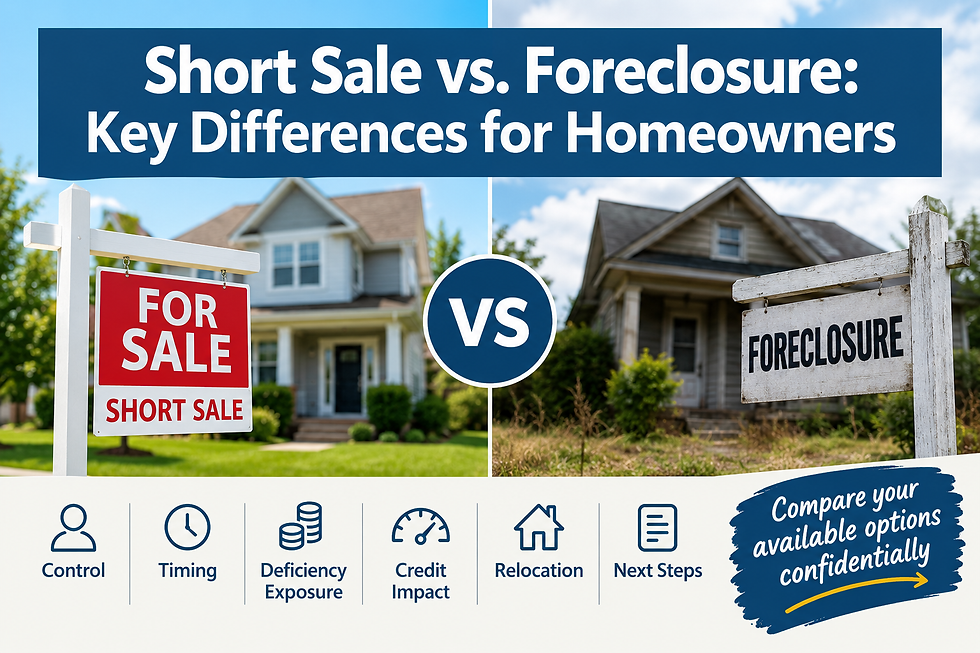
Here is a general comparison:
Short sale | Foreclosure |
Home is sold through a negotiated transaction | Property is sold through a legal foreclosure process |
Requires lender approval | Proceeds under applicable foreclosure procedures |
Homeowner participates in finding a buyer | Homeowner generally has less control over the sale |
May help avoid a completed foreclosure | Results in a completed foreclosure if the process reaches sale |
Deficiency treatment depends on written approval and applicable law | Potential deficiency consequences depend on applicable law and circumstances |
A short sale may also have financial and credit consequences. Homeowners should understand whether the lender will waive any remaining mortgage balance and whether additional contributions or other conditions will apply.
Do not assume that selling the home for less than the mortgage balance automatically eliminates the remaining debt.
Before signing a short sale approval agreement, review its terms carefully and consider obtaining legal and tax advice.
Frequently Asked Questions About Short Sales and Foreclosure
1. Does a short sale stop foreclosure?
No. Starting a short sale does not automatically stop foreclosure. Listing a property, receiving an offer, or submitting documents does not necessarily suspend foreclosure proceedings. The mortgage servicer must agree to any postponement unless a separate legal protection requires it.
2. Can a short sale delay a foreclosure sale?
Yes, it may. A mortgage servicer may agree to postpone a scheduled foreclosure sale while reviewing or completing an approved short sale. Certain federal loss mitigation protections may also restrict foreclosure sales when applicable requirements are met.
3. Can I start a short sale after receiving a foreclosure notice?
Yes. Receiving a foreclosure notice does not necessarily mean you have lost the opportunity to pursue a short sale. However, the amount of time remaining and the stage of the foreclosure process are important. Contact your servicer immediately to discuss available options.
4. What happens if my short sale is still pending when the foreclosure sale date arrives?
A pending short sale does not automatically cancel a scheduled foreclosure sale. Unless the servicer confirms a postponement or an applicable legal protection prevents the sale, foreclosure may continue. Contact your mortgage servicer and seek legal guidance immediately.
5. How long does a lender take to approve a short sale?
Approval timelines vary depending on the lender, loan investor, completeness of the documents, property valuation, buyer's offer, and any additional lienholders.
For example, Fannie Mae's guidelines generally require a written response within 30 calendar days after receiving a complete borrower response package, when required, and an initial short sale offer. This is a program-specific guideline, not a universal approval deadline.
Servicing Guide
6. Can a short sale stop foreclosure if I already have a buyer?
Having a buyer can help move the short sale process forward, but the lender must still review and approve the proposed transaction. A buyer's offer alone does not stop foreclosure. Ask the servicer whether it will postpone the scheduled sale while reviewing the offer.
7. Is it too late to pursue a short sale after foreclosure begins?
Not necessarily. Some homeowners can still pursue a short sale after foreclosure proceedings have started. However, if a foreclosure sale is approaching, immediate action is important. The available options depend on the remaining timeline, lender requirements, and applicable law.
Take the Next Step Before Your Foreclosure Deadline
If you are behind on mortgage payments and worried about losing your home, understanding your foreclosure timeline should be a priority.
A short sale may be an option worth exploring, but timing, lender communication, and proper documentation matter.
You do not have to wait until foreclosure is almost complete to start asking questions.
The sooner you understand your situation, the more time you may have to evaluate possible solutions.
Review your foreclosure timeline now.
Before moving forward, consider these questions:
Do you know whether foreclosure has officially started?
Have you received a foreclosure sale notice?
Have you contacted your mortgage servicer about short sale eligibility?
Do you know whether the lender will postpone foreclosure while reviewing your request?
Are your financial documents ready?
Getting clarity on these questions can help you make informed decisions about your next steps.
If you are considering a short sale, speak with a real estate professional experienced in short sales and consult a qualified foreclosure attorney when legal deadlines are involved. No short sale can guarantee that foreclosure will be stopped or delayed.
Important Sources and Further Reading
The following authoritative resources provide additional information about short sales, foreclosure timelines, and homeowner protections:
1. Consumer Financial Protection Bureau (CFPB) – Mortgage Servicing and Loss Mitigation ProceduresExplains federal foreclosure protections and requirements for complete loss mitigation applications.
2. U.S. Department of Housing and Urban Development (HUD) – Avoiding ForeclosureProvides information about foreclosure stages, lender communication, and housing counseling.
3. Fannie Mae – Fannie Mae Short Sale Servicing GuidelinesExplains short sale processing requirements and the importance of communicating that listing a property does not automatically delay foreclosure.
4. Fannie Mae – Suspending Foreclosure Proceedings for Workout NegotiationsProvides guidance on suspending foreclosure proceedings during certain approved loss mitigation transactions.
Disclaimer: This article is for educational and informational purposes only. It is not legal, financial, or tax advice. Foreclosure procedures, deadlines, and short sale requirements vary based on applicable laws, loan agreements, and mortgage servicer or investor guidelines. Homeowners should verify their specific deadlines and seek qualified professional guidance.

Comments