Will a Short Sale Ruin My Credit? What Actually Happens
Short answer: A short sale will lower your credit score and stay on your credit report for up to seven years, but it is usually less damaging than a foreclosure, and you can often qualify for a new mortgage in two to four years instead of seven. How badly it hurts depends mostly on how many payments you missed before the sale closed.
Credit is the number one worry we hear from homeowners considering a short sale. This guide explains what actually shows up on your report, how long it stays, how soon you can buy again with each loan type, and the steps that help you recover faster.
How Long Does a Short Sale Stay on Your Credit Report?
A short sale usually stays on your credit report for up to seven years. When that seven-year clock starts depends on your payment history:
If you were behind on payments: the account stays for seven years from the date of the original delinquency (your first missed payment that was never caught up).
If you were never late: the account stays for seven years from the date the lender reported it settled.
On your report, a short sale usually does not say "short sale." It typically appears as a mortgage that was settled or paid for less than the full balance. The late payments leading up to the sale are reported separately, and they often do more damage than the settlement itself.
Short Sale vs. Foreclosure: Which Is Worse for Your Credit?
Both are serious negative marks and both can stay on your report for up to seven years. The biggest practical difference is how soon you can get a new home loan:
After a short sale: a conventional (Fannie Mae or Freddie Mac) loan generally requires a four-year wait, or two years with documented extenuating circumstances.
After a foreclosure: the standard conventional waiting period is seven years.
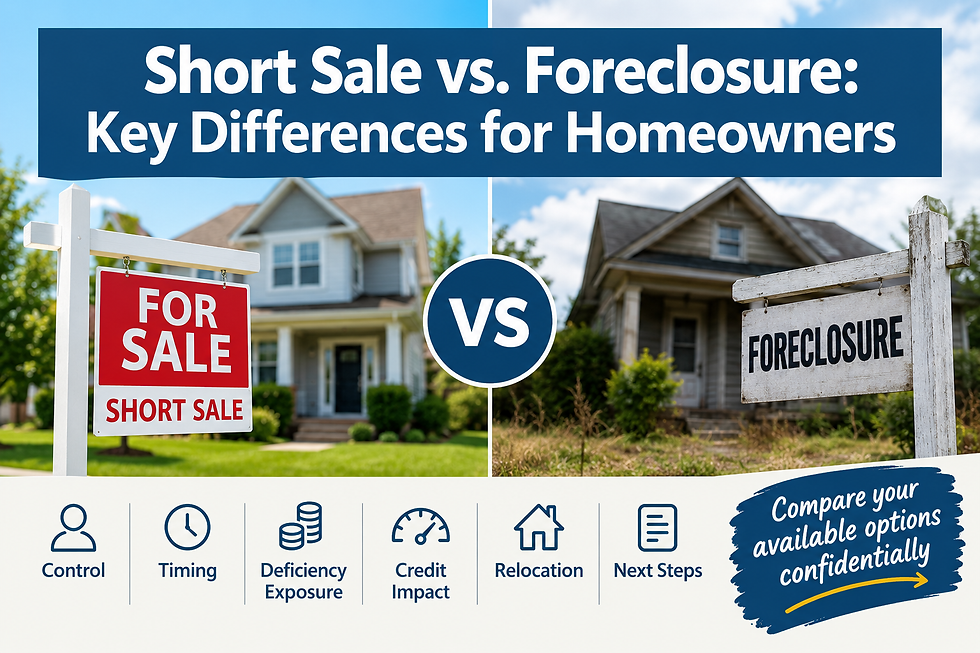
A short sale also lets you sell on your own timeline, negotiate the remaining balance, and avoid a public foreclosure. For a full side-by-side, see our guide Short Sale vs. Foreclosure: Key Differences.
How Soon Can You Buy a Home After a Short Sale?
Waiting periods depend on the type of loan you apply for next. These are the general guidelines; individual lenders can add stricter rules of their own.
Conventional (Fannie Mae / Freddie Mac): 4 years from the date the short sale was completed, or 2 years if you can document extenuating circumstances such as a job loss, serious illness, or death of a wage earner.
FHA: generally 3 years from the date of the short sale. HUD allows exceptions for documented extenuating circumstances beyond your control, and borrowers who were current on their payments before the sale may qualify sooner.
VA: the VA itself does not set a mandatory waiting period after a short sale, but most lenders require about 2 years. Some lenders waive that if you made every payment on time in the 12 months before the sale.
USDA: typically 3 years.
Non-QM and portfolio loans: rules vary by lender; some have shorter waits, usually with higher rates or bigger down payments.
Waiting periods are counted from the completion date of the short sale, not from when you listed the home. Keep a copy of your closing statement so a future lender can verify the date.
What Determines How Much a Short Sale Hurts Your Score?
Missed payments before the sale. Each 30-, 60- and 90-day late payment is reported on its own. Fewer missed payments means less damage.
Your score before the hardship. People with higher scores usually see a bigger drop in points, but recover to a usable range within a few years.
How the lender reports the deficiency. If the lender waives the remaining balance, you avoid a separate collection account or judgment showing up later.
The rest of your credit file. Other accounts paid on time, low credit card balances, and no new negatives all help offset the hit.
How to Protect Your Credit During a Short Sale
Start early. The sooner a short sale begins, the fewer late payments pile up. See When Is It Too Late to Start a Short Sale?
Ask for a deficiency waiver in writing. Your approval letter should state that the remaining balance is forgiven, not just that the sale is approved.
Keep every other account current. Car loans, credit cards and utilities paid on time limit the overall damage.
Check your reports after closing. Make sure the mortgage shows a zero balance and is reported as settled, not as a foreclosure. Dispute anything inaccurate.
Plan for the tax question. Forgiven mortgage debt can create a Form 1099-C. Talk to a tax professional before you file.
How to Rebuild Your Credit After a Short Sale
Pay every remaining bill on time. Payment history is the biggest factor in most credit scores.
Keep credit card balances low, ideally well under 30% of each limit.
If you have few active accounts, consider a secured credit card and use it lightly.
Avoid opening many new accounts at once.
Save for a down payment during the waiting period. A larger down payment and steady income make your next mortgage application stronger.
Pull your free credit reports regularly at AnnualCreditReport.com to track progress and catch errors.
Many homeowners see their scores improve steadily within the first two years after a short sale, well before it drops off the report.
Frequently Asked Questions
Does a short sale hurt your credit as much as a foreclosure?
Both are serious, but a short sale usually lets you qualify for a new conventional mortgage much sooner: about four years (two with extenuating circumstances) instead of seven after a foreclosure.
Will my credit report say "short sale"?
Usually not. It typically shows the mortgage as settled or paid for less than the full balance, along with any late payments before the sale.
Can I buy a house two years after a short sale?
Possibly. A VA loan or a conventional loan with documented extenuating circumstances may be available at about two years. FHA is generally three years, with exceptions.
Can a short sale be removed from my credit report early?
Not if it is reported accurately. You can dispute errors, such as a short sale reported as a foreclosure or a balance still showing as owed after a waiver.
Is it better to stop paying my mortgage to get a short sale approved?
No. Some lenders require a documented hardship, but missing payments adds damage to your credit. Talk to a short sale professional before you stop paying.
Related guides: Who Qualifies for a Short Sale? · How Long Does a Short Sale Take? · What Is a Short Sale?
Sources: Fannie Mae Selling Guide B3-5.3-07 (waiting periods); HUD Handbook 4000.1 short sale rules (FHA.com); Experian: When short sales are deleted from credit reports.
About The Owners Leaf Team
The Owners Leaf is a short sale mitigation company that helps homeowners nationwide who owe more than their home is worth. Our team is led by Jason Lash (CEO & Founder, co-host of the Real Estate Minute on WOOD Radio), Heather Garvin (President & Founder), and Jhamie BV (Lead Negotiator), who works directly with lenders on short sale approvals.
Meet the team, get free help with your situation, or call 616-821-1350.
Important: This article is general educational information, not legal, tax, credit, or mortgage advice. Credit reporting and loan waiting periods depend on your lender, loan program, and individual circumstances, and guidelines can change. Confirm current requirements with a licensed lender before applying.


Comments