Who Qualifies for a Short Sale? Common Requirements and Hardships
Who Qualifies for a Short Sale?

A homeowner may qualify for a short sale when the home is worth less than the amount owed on the mortgage, the homeowner has a legitimate financial hardship or other circumstance affecting the ability to keep the mortgage current, and the mortgage servicer determines that a short sale is an appropriate loss-mitigation option. The homeowner generally must provide financial and property documentation and receive approval from the mortgage servicer and other required parties. Short sale qualifications are case-specific, so meeting common requirements does not guarantee approval.
What Is a Short Sale?
A short sale occurs when a home is sold for less than the outstanding mortgage balance and the lender or mortgage servicer agrees to accept the sale proceeds under approved terms.
The Consumer Financial Protection Bureau describes a short sale as a type of loss mitigation in which a home is sold for less than what is owed on the mortgage. The servicer must generally approve the transaction before it can proceed as a short sale.
A short sale is different from simply selling a home for less than the owner paid for it.
The important question is whether the expected proceeds from the sale are insufficient to satisfy the mortgage debt and whether the lender or servicer is willing to approve the transaction.
The 5 Main Factors That Affect Short
Sale Qualifications
There is no single nationwide checklist that guarantees short sale approval. However, several factors commonly play an important role in a lender or servicer's review.
1. Negative Equity or Insufficient Property Value
One of the most common reasons homeowners consider a short sale is negative equity.
Negative equity generally means the property is worth less than the amount owed against it.
For example:
Estimated property value: $300,000
Mortgage balance: $350,000
Approximate difference: $50,000
That does not automatically mean the homeowner qualifies for a short sale.
The lender or servicer may consider the property's current market value, expected sale price, transaction costs, loan balance, liens, and other circumstances.
The CFPB explains that homeowners may consider requesting short-sale approval when the home is worth less than the amount owed on the mortgage.
2. Financial Hardship
Financial hardship is another important part of many short sale reviews.
A hardship can affect a homeowner's ability to continue making mortgage payments or maintaining the property.
Examples may include:
Loss of employment
Significant reduction in income
Major increase in household expenses
Divorce or separation
Death of a borrower
Business or income disruption
Unexpected major expenses
Relocation
Other substantial financial changes
The existence of a hardship does not automatically mean a short sale will be approved.
The servicer may review the homeowner's financial information to determine whether the hardship is documented and whether the requested loss-mitigation option is appropriate.
3. Lender or Servicer Approval
A homeowner cannot simply decide to conduct a short sale without involving the mortgage servicer.
The servicer may require a formal loss-mitigation application and supporting documentation.
Depending on the loan and circumstances, other parties may also need to approve the transaction.
For example, additional mortgage loans or liens against the property may create additional requirements.
Federal mortgage-servicing rules recognize an approved short sale as a transaction approved by the relevant parties, which can include the servicer and other affected lienholders or insurers when applicable.
That is why homeowners should determine who has authority over each loan or lien before assuming a short sale can move forward.
4. Complete Financial Documentation
Documentation is a major part of the short sale review.
A homeowner may be asked to provide information such as:
Recent mortgage statements
Income documentation
Bank statements
Tax returns
Employment information
Monthly expenses
Asset information
Hardship explanation
Property information
Existing loan information
Information about other liens
A purchase offer once the property is marketed
The exact documents vary based on the lender, loan, servicer, and individual circumstances.
Incomplete or outdated information can create delays or require additional requests from the servicer.
For that reason, homeowners should keep copies of everything they submit.
5. The Overall Financial Situation
Short sale qualifications are not based only on the property's value.
The servicer may review the homeowner's broader financial circumstances.
This can include:
Income
Expenses
Assets
Mortgage balance
Delinquency status
Property value
Other debts
Liens
Hardship circumstances
Available alternatives
The purpose is to determine whether the requested loss-mitigation option fits the homeowner's circumstances under the applicable program and loan requirements.
What Types of Hardships May Support a Short Sale Review?
A hardship is generally a significant financial or personal circumstance that affects the homeowner's ability to maintain the mortgage.
Income Reduction
A significant reduction in income can make an existing mortgage payment difficult to maintain.
Documentation may include pay records, employment information, or other evidence of the income change.
Job Loss
Unemployment or a major employment change can affect the homeowner's ability to make mortgage payments.
Major Unexpected Expenses
Large unexpected expenses can create financial pressure that makes continuing the mortgage unsustainable.
Divorce or Separation
A change in household finances following divorce or separation may affect the ability to maintain the mortgage.
Death of a Borrower
The death of a borrower can significantly change household income and expenses.
Relocation or Major Life Changes
A required relocation or substantial change in circumstances may also be relevant to a loss-mitigation review.
The important point is that hardship documentation matters. Homeowners should be prepared to explain what changed, when it changed, and how the change affected their ability to maintain the mortgage.
What Documents Should You Prepare for a Short Sale?
If you are exploring short sale qualifications, organizing your paperwork early can make the process easier.
Consider preparing a folder containing:
Mortgage Information
Current mortgage statement
Loan number
Servicer contact information
Information for additional mortgages
Income Information
Recent pay statements
Employment information
Other income documentation
Recent tax returns when requested
Financial Information
Bank statements
Monthly expenses
Asset information
Outstanding debt information
Hardship Information
Prepare a clear explanation describing:
What happened
When it happened
How your finances changed
Why continuing the mortgage has become difficult
What you are requesting from the servicer
Property Information
You may also need:
Property address
Current property condition
Existing liens
Listing information
Purchase offer
Other property-related documents requested by the servicer
Requirements can differ, so follow the specific document list provided by the mortgage servicer.
Does Being Underwater Automatically Qualify You?
No.
Being underwater—or having negative equity—can be an important reason to investigate a short sale, but it does not automatically establish eligibility.
For example, a homeowner could owe more than the home is worth but still have other options available.
Likewise, a homeowner experiencing financial hardship may not automatically qualify for a short sale.
The lender or servicer ultimately reviews the complete situation and determines whether the transaction meets the applicable requirements.
This is one of the most important points for homeowners searching for short sale qualifications:
Negative equity + financial hardship does not equal automatic approval.
The complete financial picture matters.
Does the Home Have to Be in Foreclosure?
No.
A homeowner does not necessarily have to wait until foreclosure begins before investigating a short sale.
In fact, homeowners experiencing financial difficulty should contact their mortgage servicer as early as possible.
The CFPB recommends that homeowners who are struggling to make mortgage payments contact their servicer promptly and explore available loss-mitigation options.
Waiting until a deadline is approaching can make the situation more difficult to manage.
If foreclosure proceedings have already started, homeowners should pay close attention to all deadlines and consider qualified legal guidance when appropriate.
What Happens After You Appear to Meet the Requirements?
Meeting common short sale qualifications is only the beginning.
A typical process may include:
1. Financial reviewYour financial circumstances and hardship are evaluated.
2. Property valuationThe property's market value and expected sale proceeds are considered.
3. Listing the propertyIf appropriate, the home may be marketed for sale.
4. Receiving an offerA buyer submits an offer.
5. Short sale packageThe required documents and offer are submitted for review.
6. Servicer evaluationThe lender or servicer reviews the proposed transaction.
7. Negotiation or additional documentationAdditional information may be requested.
8. Approval or denialThe relevant parties determine whether the transaction can proceed.
9. ClosingIf approved and all required conditions are satisfied, the sale can move toward closing.
The timeline can vary considerably depending on the circumstances, parties involved, documentation, and transaction.
What About the Remaining Mortgage Balance?
This is an important question to ask before agreeing to a short sale.
If the property sells for less than the mortgage balance, there may be a difference between the amount owed and the amount recovered through the transaction.
The treatment of that difference can depend on the loan, agreement, and applicable law.
Homeowners should not assume that completing a short sale automatically eliminates every remaining obligation.
Ask the lender or servicer specifically:
Will the remaining deficiency be waived?
Is the waiver part of the short sale approval?
Will the agreement be provided in writing?
Are there other liens or debts that need separate approval?
The CFPB recommends getting a deficiency waiver in writing when one is agreed to.
If you have questions about legal liability or tax consequences, consider speaking with a qualified attorney or tax professional.
How Can You Check Your Likely Short Sale Eligibility?
If you are wondering whether a short sale could be worth exploring, start with five questions:
Question 1: What is my home worth today?
Obtain a realistic estimate of the property's current market value.
Question 2: How much do I owe?
Review your current mortgage balance and identify any additional loans or liens.
Question 3: What changed financially?
Identify the hardship and gather documentation supporting it.
Question 4: Can I realistically maintain the mortgage?
Consider your current income, expenses, debts, and foreseeable financial circumstances.
Question 5: What does my servicer require?
Contact the mortgage servicer and ask what loss-mitigation options may be available and what documentation is required.
These questions cannot guarantee approval, but they can help you determine whether it makes sense to investigate a short sale further.
Beware of Short Sale and Mortgage Relief Scams
Homeowners experiencing financial hardship can become targets for companies promising quick mortgage solutions.
Be cautious if someone:
Guarantees short sale approval
Guarantees that foreclosure will be stopped
Demands a large upfront fee
Tells you to stop communicating with your mortgage servicer
Tells you to send mortgage payments somewhere other than your lender or servicer
Pressures you to sign documents immediately
Asks you to transfer your property deed
The Federal Trade Commission warns homeowners about mortgage-relief scams and recommends contacting the mortgage servicer directly and seeking legitimate housing counseling assistance.
Never assume that a company is legitimate simply because it uses terms such as "government program," "foreclosure prevention," or "mortgage relief."
Frequently Asked Questions About Short Sale Qualifications
1. Who qualifies for a short sale?
A homeowner may be considered for a short sale when the property value is insufficient to cover the mortgage debt, there is a qualifying financial or other hardship or circumstance, and the lender or servicer determines that the short sale meets applicable requirements. Approval is case-specific.
2. Do I need to be behind on my mortgage to qualify for a short sale?
Not necessarily. Eligibility depends on the specific loan, circumstances, and applicable loss-mitigation requirements. Contact your servicer early rather than assuming you must first miss payments.
3. Does negative equity mean I automatically qualify?
No. Negative equity can be a significant factor, but the servicer may also review hardship, financial information, property value, documentation, loan requirements, and other circumstances.
4. What is considered a financial hardship for a short sale?
Potential hardships can include job loss, income reduction, major unexpected expenses, divorce or separation, death of a borrower, relocation, or other significant changes affecting the ability to maintain the mortgage. Documentation may be required.
5. What documents are needed for a short sale?
Requirements vary, but homeowners may be asked for mortgage statements, income records, bank statements, tax documents, expense information, hardship documentation, property information, and other financial records.
6. Who approves a short sale?
The mortgage servicer and other required parties may need to approve the transaction. Additional mortgage holders, lienholders, insurers, or other parties may also have approval rights depending on the circumstances.
7. Does a short sale eliminate what I owe?
Not automatically. Homeowners should ask specifically how any remaining balance will be handled and obtain any agreed deficiency waiver in writing. Legal and tax consequences can vary, so professional advice may be appropriate.
The Bottom Line: Short Sale Qualifications Are Case-Specific
The most important thing to understand about short sale qualifications is that there is no universal formula that guarantees approval.
A homeowner may have a stronger reason to investigate a short sale when:
The property is worth less than the mortgage balance
There is a documented financial hardship
Continuing the mortgage has become difficult
The homeowner can provide the required financial documentation
The transaction meets the servicer's applicable requirements
All required parties can approve the transaction
But these factors do not guarantee that a short sale will be approved.
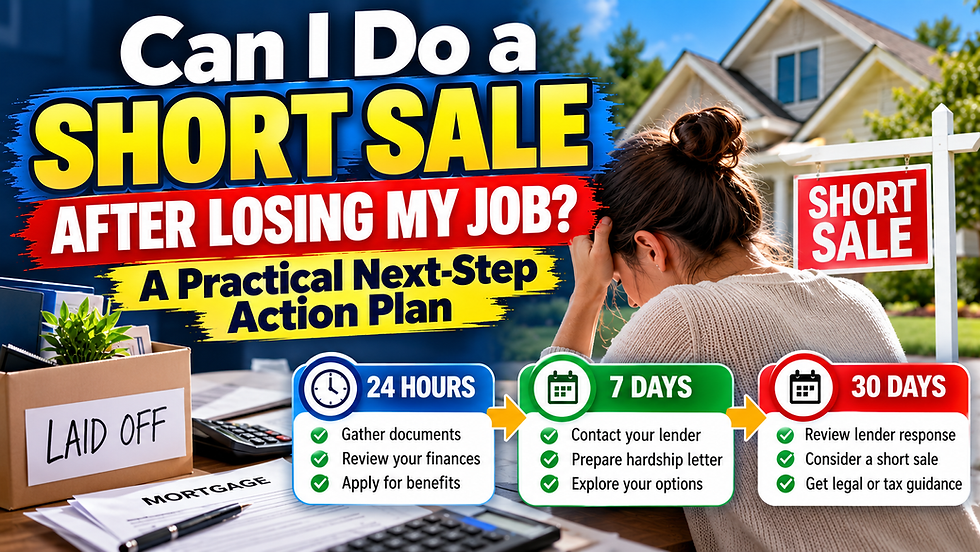
If you are experiencing financial difficulty, start by gathering your mortgage information, documenting your circumstances, contacting your servicer, and understanding the alternatives available to you.
Check Your Likely Eligibility
If you are unsure whether your circumstances may fit a short sale, check your likely eligibility and learn what information you may need before taking the next step.
Understanding your options early can help you have a more informed conversation with your mortgage servicer and other qualified professionals.
Important Disclaimer: This article is for general educational purposes only and does not constitute legal, tax, financial, mortgage-servicing, or credit advice. Short sale requirements and outcomes vary by loan, servicer, program, and individual circumstances. No particular result or approval is guaranteed.


Comments