Can I Do a Short Sale After Losing My Job: 7 Questions Homeowners Ask

Losing your job can make it difficult to keep up with mortgage payments, especially if the income loss is significant or expected to continue. Can job loss qualify as a hardship for a short sale? It can be considered a financial hardship, but job loss alone does not automatically qualify a homeowner for a short sale. Your lender or mortgage servicer will review your overall financial circumstances, the property value, mortgage balance, and available loss-mitigation options. A short sale occurs when a home is sold for less than the mortgage balance with the lender or servicer's approval.
If you recently lost your job and are concerned about your mortgage, understanding the answers to these short sale after job loss questions can help you prepare for a conversation with your mortgage servicer and determine what information you may need.
1. Can job loss qualify as a hardship?
Yes, job loss can be considered a financial hardship, but it does not automatically mean you qualify for a short sale.
A significant reduction or loss of employment income can affect your ability to make your mortgage payments. The Consumer Financial Protection Bureau (CFPB) specifically identifies job loss as an example of a financial hardship when discussing mortgage assistance options.
Your mortgage servicer may want to understand:
When you lost your job
Whether your income has stopped completely or been reduced
Whether you expect to return to work
Your current household income
Your monthly expenses
Your mortgage payment
Your other debts and financial obligations
Whether you have savings or other available assets
Whether the hardship is temporary or ongoing
A short sale is only one possible loss-mitigation option. Depending on your circumstances, your servicer may discuss alternatives such as forbearance or other available assistance programs.
Important: A lender's approval is required for a short sale. Losing your job does not guarantee that a short sale will be approved.
2. What information should I prepare after losing my job?
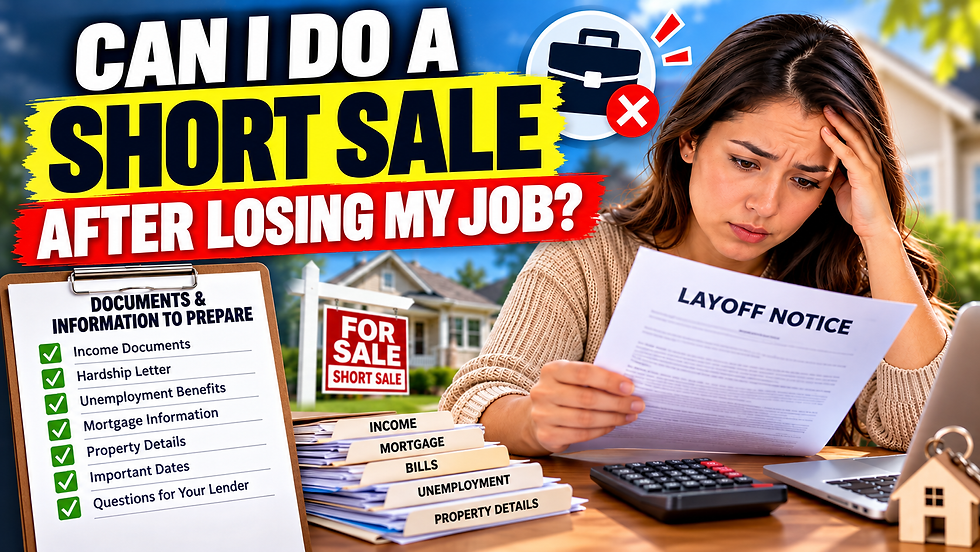
Start by organizing documents that show both your income loss and current financial position.
Depending on your circumstances and what your servicer requests, useful information may include:
Recent mortgage statements
Employment termination or layoff documentation
Recent pay stubs
Bank statements
Unemployment benefit documentation, if applicable
Tax returns
Documentation of other household income
Monthly expense information
Credit or debt obligations
Property tax information
Homeowners insurance information
Information about other liens on the property
A written explanation of your financial hardship
Keep copies of everything you submit.
The CFPB recommends contacting your mortgage servicer promptly when you are concerned about making payments and being prepared to explain why you cannot make the payment, whether the problem is temporary or permanent, and details about your income, expenses, and assets.
3. Do I need a hardship letter after losing my job?
A hardship letter may be requested as part of a mortgage assistance or short-sale review.
The purpose is to explain what changed financially and why the change affects your ability to maintain the mortgage.
A useful hardship explanation should generally be factual and specific. For example, you might explain:
When your employment ended
Whether the job loss was voluntary or involuntary
How your income changed
How the change affects your mortgage payment
Whether you have attempted to replace the lost income
What your current financial situation looks like
Why you are seeking assistance
Avoid exaggerating your circumstances or making promises you cannot support.
Your servicer may have its own forms, documentation requirements, and instructions, so ask what is required before submitting your package.
4. Does owing more than my home is worth matter?
It can.
A short sale generally involves selling the property for less than the amount owed on the mortgage, subject to approval by the lender or servicer.
For example, suppose:
Mortgage balance: $300,000
Approved sale price: $250,000
Difference: $50,000
That does not necessarily mean the homeowner personally owes $50,000 after the sale. The treatment of the remaining balance depends on the loan, the approval terms, applicable law, and the agreement with the lender.
If a short sale is being considered, ask specifically what happens to any remaining mortgage balance or deficiency. The CFPB notes that in some states a lender may have rights to pursue a deficiency and recommends asking whether the lender will waive it and getting any waiver in writing.
5. Should I contact my lender before I miss a mortgage payment?
Yes, consider contacting your mortgage servicer as soon as you know you may have trouble making payments.
The CFPB recommends contacting the servicer right away if you cannot pay your mortgage or are worried about missing a payment. A HUD-approved housing counseling agency can also provide assistance at no cost.
When speaking with your servicer, you can explain:
"I recently lost my job and I'm concerned that I may not be able to maintain my mortgage payments. I'd like to understand what loss-mitigation options may be available."
Then ask:
What assistance options are available?
Is a short sale an option for my circumstances?
What documents do you need?
What deadlines apply?
What happens if I cannot make my next payment?
What happens to any remaining mortgage balance after an approved short sale?
Can you provide any agreement or waiver in writing?
Early communication can help you understand your options before the situation becomes more urgent.
6. Could a short sale create tax consequences?
Potentially, yes. Do not assume that forgiven mortgage debt is automatically tax-free.
The IRS generally treats canceled or forgiven debt as income unless a specific exception or exclusion applies. The tax treatment can depend on factors such as the type of debt, whether you were personally liable, the property involved, your financial circumstances, and the applicable tax law.
The IRS also explains that a transaction involving a home can involve separate tax considerations related to the disposition of the property and cancellation of debt.
Because tax rules can change and individual circumstances matter, consider consulting a qualified tax professional before completing a short sale if you are concerned about canceled-debt income or reporting requirements.
Do not rely on a general online article to determine your individual tax liability.
7. When should I talk to an attorney or housing counselor?
Professional guidance can be especially useful when the situation involves questions that go beyond the basic sale process.
Consider seeking legal advice if you need help understanding:
Whether you remain personally liable for a deficiency
The language of a short-sale approval
Multiple mortgages or liens
Collection activity
Foreclosure proceedings
Bankruptcy considerations
Contractual obligations
Your rights under applicable law
A HUD-approved housing counselor can also help homeowners understand available mortgage-assistance and foreclosure-avoidance options. The CFPB specifically recommends HUD-approved counseling for homeowners seeking help with mortgage problems and short-sale decisions.
If your question is primarily about taxes, consult a tax professional. If it concerns your legal rights or liability, consult a qualified attorney.
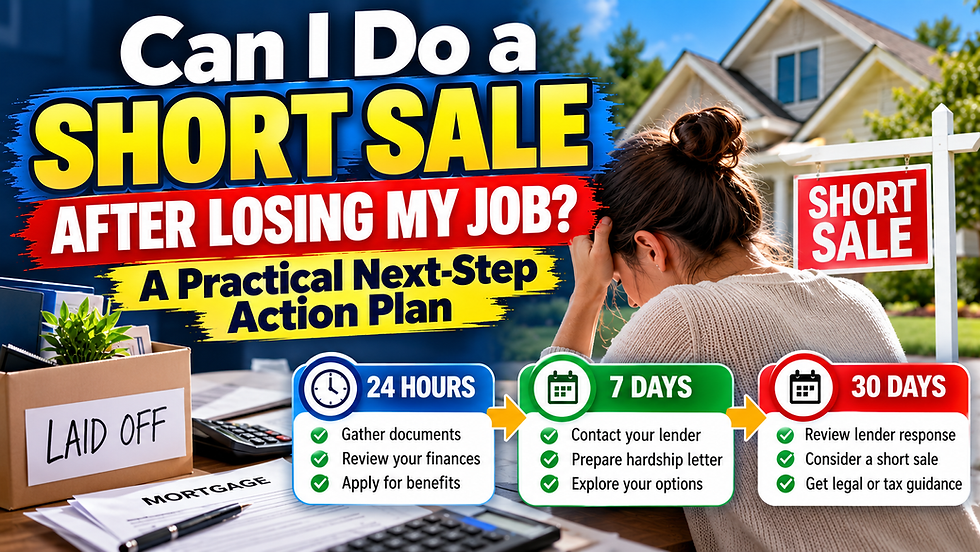
What Should I Do After Losing My Job?
If you have lost your job and are concerned about your mortgage, focus on these steps:
Within the next 24 hours
Review your current mortgage balance and payment.
Gather recent mortgage and financial documents.
Document when your employment ended.
Determine your current income.
Estimate your essential monthly expenses.
Contact your mortgage servicer if you expect difficulty making payments.
Within the next week
Ask the servicer about all available loss-mitigation options.
Find out whether a short sale could be considered.
Ask what documentation is required.
Determine whether there are other liens or debts secured by the property.
Consider speaking with a HUD-approved housing counselor.
Before agreeing to a short sale
Ask questions about:
The approved sale price
The remaining mortgage balance
Any deficiency
Whether the lender is waiving future collection
Whether the waiver will be provided in writing
Closing requirements
Potential tax consequences
Your obligations after closing
Do not assume that an approved sale automatically resolves every obligation associated with the mortgage.
Key Takeaway: Job Loss Can Change Your Mortgage Options
The most important answer to these short sale after job loss questions is that job loss can be a legitimate financial hardship, but it does not automatically qualify you for a short sale.
Your lender or mortgage servicer will evaluate your circumstances and determine which options may be available. A short sale may be considered alongside other loss-mitigation solutions, depending on your situation.
If you have recently lost your job, gathering your documents, documenting your hardship, communicating with your servicer, and understanding your potential obligations can help you approach the situation more prepared.
Talk Through Your Hardship and Timeline
If you're unsure what to do after losing your job, talk through your hardship and timeline before making a decision about your home.
A confidential review can help you organize the questions and information you may want to discuss with your mortgage servicer, housing counselor, attorney, or tax professional.
This article provides general educational information and is not legal, tax, financial, or lender advice. Short-sale eligibility, approval requirements, deficiency obligations, and tax treatment vary based on individual circumstances and applicable law.

Comments