How Does a Short Sale Work? Step-by-Step From Hardship to Closing: 7 Questions Homeowners Ask

If you owe more on your mortgage than your home may sell for, a short sale can be one option to discuss with your mortgage servicer. How does a short sale work? Generally, the homeowner works with a real estate professional to market the property, receives an offer, and submits the sale and required financial information to the mortgage servicer for review. The lender or loan owner must approve the transaction before the sale can move forward. The process can involve hardship documentation, valuation, negotiation, approval, and closing. A short sale is not automatic, and the outcome depends on the specific loan, property, financial circumstances, and approval terms.
1. How Does a Short Sale Work From Start to Finish?
A short sale generally begins when a homeowner determines that selling the property may be necessary but the expected sale proceeds may not be enough to fully pay the mortgage balance.
The process commonly includes these steps:
Review the homeowner's situation. The homeowner evaluates the mortgage balance, property value, financial hardship, and available alternatives.
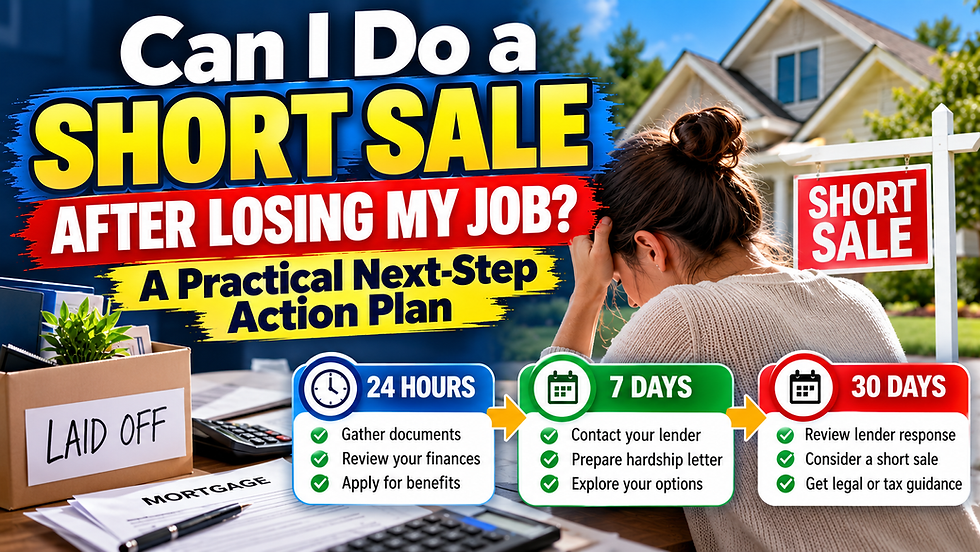
Contact the mortgage servicer. The servicer can explain available loss-mitigation options and the requirements for requesting a short sale.
Prepare financial information. The homeowner may need to provide income, expenses, bank statements, hardship information, and other documents.
List the property. A qualified real estate professional can help market the property and obtain an offer.
Receive an offer. The purchase offer is submitted for review along with the required short-sale documentation.
Lender or investor review. The mortgage servicer and, when applicable, the loan owner or other lienholders review the proposed transaction.
Approval and closing. If the required parties approve the transaction and all conditions are satisfied, the sale can proceed to closing.
The exact steps and documentation can vary depending on the mortgage, investor requirements, number of liens, and individual circumstances.
2. Why Would a Homeowner Consider a Short Sale?
A homeowner may consider a short sale when financial hardship makes keeping the property difficult and the home's value is below the amount owed.
A hardship could involve circumstances such as job loss, a significant reduction in income, unexpected expenses, divorce, or other changes that affect the homeowner's ability to maintain the mortgage.
A short sale is generally considered an alternative to foreclosure, but it is not the only option. Depending on the circumstances, homeowners may also need to consider options such as a loan modification, repayment arrangement, forbearance, deed-in-lieu of foreclosure, or selling the property through a conventional sale.
The Consumer Financial Protection Bureau recommends contacting the mortgage servicer as soon as possible when a homeowner is having difficulty making payments. [1]
3. What Documents Are Usually Needed for a Short Sale?
Documentation is an important part of the short-sale review. The exact requirements can vary, but homeowners may be asked for information such as:
Recent mortgage statements
Proof of income
Bank or financial account statements
Monthly expenses
Tax returns or other financial records
A hardship explanation or hardship letter
Information about other debts or liens
Property information
A listing agreement
A purchase contract once an offer is received
Additional forms requested by the mortgage servicer
Providing complete and accurate information can help prevent unnecessary delays. Homeowners should ask their servicer for the specific document checklist that applies to their loan.
4. Who Approves a Short Sale?
One of the most important things to understand about a short sale is that the homeowner cannot approve the short sale alone.
The mortgage servicer generally reviews the transaction, but the party that owns or has an interest in the loan may also have approval requirements. If there are multiple mortgages or liens against the property, additional parties may need to approve the transaction.
The CFPB explains that homeowners need approval from their mortgage servicer to complete a short sale and, when applicable, approval from other mortgage servicers connected to additional loans on the property. [2]
This is why a buyer's offer does not necessarily mean the short sale has been approved.
The offer still needs to go through the required review process.
5. How Long Does a Short Sale Take?
There is no universal short-sale timeline.
The time required can depend on how quickly documents are provided, the complexity of the loan, property valuation, the number of liens, lender or investor requirements, negotiations, and other circumstances.
Some transactions may move relatively quickly, while others can take considerably longer.
Homeowners should avoid making major decisions based on an assumed closing date until the necessary approvals and conditions are confirmed. If foreclosure deadlines or legal notices are involved, timing becomes especially important.
The CFPB advises homeowners who are struggling with mortgage payments to contact their servicer promptly rather than waiting for the situation to worsen. [3]
6. What Happens to the Remaining Mortgage Balance
After a Short Sale?
This is one of the most important questions in any short sale.
A short sale involves selling the property for less than the amount owed on the mortgage. However, homeowners should not assume that the remaining balance is automatically forgiven.
The approval documents should clearly explain what happens to any remaining debt. Depending on the transaction and applicable law, the homeowner may have potential responsibility for a deficiency unless the lender or other creditor agrees to waive it.
The CFPB specifically advises homeowners to ask whether the lender will waive the deficiency and, if so, to obtain the waiver in writing and keep it for their records. [4]
Because the consequences can be significant, homeowners should carefully review the short-sale approval before signing or closing.
7. What Are the Tax, Credit, and Legal Considerations?
A short sale can have financial, tax, credit, and legal consequences, and these consequences can vary based on the homeowner's circumstances.
Tax considerations
Canceled or forgiven debt can sometimes have tax consequences. The IRS explains that canceled debt is generally treated as income, although exceptions and exclusions may apply. [5]
A homeowner should speak with a qualified tax professional about the specific transaction rather than assuming that forgiven mortgage debt will or will not be taxable.
Legal considerations
A short sale agreement can affect the homeowner's rights and obligations. Legal questions may be especially important if the homeowner has received foreclosure notices, is facing a deadline, has multiple liens, has questions about deficiency liability, or does not understand the terms of an approval.
A qualified attorney can explain legal rights and obligations that a real estate professional or mortgage servicer may not be able to address.
Credit considerations
A short sale can affect credit history, but the impact can depend on the homeowner's payment history, how the account is reported, and other factors. There is no single credit-score outcome that applies to every homeowner.
For these reasons, homeowners should focus on understanding the complete transaction rather than relying on promises about a specific financial or credit result.
What Should Homeowners Do Before Starting a Short Sale?
Before moving forward, homeowners should gather their mortgage information, understand the estimated property value, document their financial circumstances, and contact their mortgage servicer about available loss-mitigation options.
It can also be helpful to work with qualified professionals who understand short-sale transactions.
A HUD-approved housing counselor can provide guidance about mortgage and foreclosure-avoidance options. The CFPB notes that HUD-approved housing counseling agencies can provide assistance at no cost to homeowners. [6]
Homeowners should also be cautious about companies or individuals who guarantee that they can stop foreclosure, guarantee approval, or promise a specific financial outcome.
The CFPB identifies guarantees of mortgage changes or guaranteed foreclosure prevention as potential warning signs of scams. [7]
Key Takeaway: Understanding How a Short Sale Works
So, how does a short sale work? A homeowner experiencing financial hardship may work with a real estate professional to sell a property for less than the outstanding mortgage balance, but the transaction generally requires approval from the mortgage servicer and potentially other interested parties.
The process usually involves:
Hardship review → Documentation → Property listing → Buyer offer → Lender review → Negotiation → Approval → Closing
The most important point is that every short sale is different. Approval is not guaranteed, the timeline can vary, and the homeowner should understand what happens to any remaining debt before agreeing to the transaction.
If you are considering a short sale, getting the right information early can help you understand your available options and make a more informed decision.
See Whether a Short Sale May Fit Your Situation
If you're dealing with financial hardship, an underwater mortgage, or concerns about foreclosure, you don't have to make the decision without understanding your options.
See whether a short sale may fit your situation.
A confidential review can help you understand the basic steps, information needed, and questions to raise with your mortgage servicer and other qualified professionals.
Frequently Asked Questions About How a Short Sale Works
What is a short sale?
A short sale is a real estate transaction in which the home is sold for less than the outstanding mortgage balance, with the required lender or servicer approval.
How does a short sale work?
The homeowner typically works with a real estate professional to market the property, obtains an offer, and submits the transaction and required financial documents to the mortgage servicer for review and approval.
Does the lender have to approve a short sale?
Yes. A short sale generally requires approval from the mortgage servicer and may also require approval from the loan owner, investors, or other lienholders.
Does a short sale eliminate the mortgage debt?
Not necessarily. Homeowners should review the written approval carefully to determine whether any remaining balance is being waived or whether the homeowner could remain responsible for some amount.
How long does a short sale take?
There is no standard timeline. The process can depend on documentation, property valuation, lender requirements, negotiations, multiple liens, and other circumstances.
Can a short sale affect my credit?
It can. The effect depends on factors such as payment history and how the account is reported. No specific credit-score outcome should be guaranteed.
Should I talk to a lawyer or tax professional?
You should consider professional advice when you have questions about deficiency liability, foreclosure deadlines, legal rights, contracts, or potential tax consequences. A tax professional can explain how canceled debt may apply to your individual tax situation.
Important Limitations
This article provides general educational information and is not legal, tax, financial, or mortgage advice. Short-sale requirements, lender policies, loan-investor rules, tax treatment, deficiency liability, and credit-reporting consequences can vary. Homeowners should confirm transaction-specific requirements with their mortgage servicer and seek qualified legal or tax advice when appropriate.
Sources: Consumer Financial Protection Bureau (CFPB), Internal Revenue Service (IRS), and Fannie Mae.


Comments