Short Sale vs. Foreclosure: Key Differences for Homeowners: A Practical Next-Step Action Plan

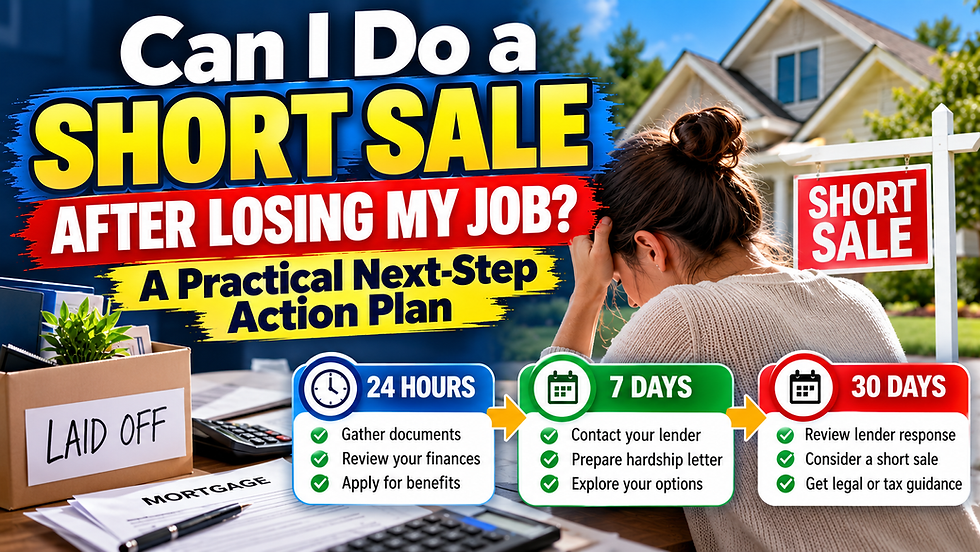
If you are comparing a short sale vs. foreclosure, the first step is not to panic or wait. Start by contacting your mortgage servicer, gathering your loan and financial documents, identifying important deadlines, and learning which options may be available. Over the next 24 hours, focus on information and communication. Within seven days, organize your finances, property information, professional contacts, and questions. Within 30 days, work toward a documented decision based on control, timing, potential deficiency exposure, credit impact variables, relocation, and your available next steps. There is no guaranteed outcome, so get the facts specific to your situation before making a major decision.
Short Sale vs. Foreclosure Next Steps: Start With the Big Picture
A short sale and foreclosure are different processes.
A short sale involves selling a home for less than the amount owed on the mortgage, with the lender or mortgage servicer agreeing to the transaction. A foreclosure is a legal process through which the lender seeks to satisfy the mortgage debt using the property after the borrower has failed to meet the loan obligations.
The important question is not simply, “Which one is better?”
Instead, ask:
What options are actually available to me?
How much control do I have over the process?
What deadlines am I facing?
Could I remain responsible for a deficiency?
How could the option affect my credit?
When would I need to relocate?
What happens if my preferred option does not work?
The answers can depend on your loan, financial circumstances, property, lender or servicer requirements, and applicable law.
Your Next 24 Hours: Take Control of the Situation
The first day should be about gathering facts—not making rushed decisions.
1. Contact Your Mortgage Servicer
If you are having trouble making your mortgage payment or expect to miss one, contact your mortgage servicer as soon as possible.
The Consumer Financial Protection Bureau recommends calling the servicer right away and being prepared to explain why you cannot make the payment, whether the problem is temporary or permanent, and information about your income, expenses, and other assets.
Ask:
What is the current status of my mortgage?
What loss-mitigation options may be available?
Is a short sale an option?
What documents do you need?
Are there any immediate deadlines?
Is there a scheduled foreclosure sale?
Who should be my primary point of contact?
Write down the representative's name, the date of the call, and any reference or case number.
2. Gather Your Basic Mortgage Documents
Create one folder for everything related to the property and loan.
Start with:
Most recent mortgage statement
Loan number
Servicer contact information
Recent payment history
Letters or notices from the servicer
Foreclosure-related documents, if any
Information about second mortgages or home-equity loans
Property tax information
Homeowners insurance information
Do not throw away letters simply because they are difficult to understand. A deadline contained in a notice may become important later.
3. Write Down Your Important Dates
Create a simple timeline.
Include:
Date of your last mortgage payment
Missed-payment dates
Dates of servicer notices
Loss-mitigation application dates
Document-submission dates
Deadlines listed in correspondence
Any scheduled foreclosure-related dates
Timing matters. CFPB guidance emphasizes acting early and submitting complete information when seeking mortgage assistance.
Your First 7 Days: Build Your Decision File
Once the immediate situation is documented, spend the next week organizing the information needed to compare your options.
4. Organize Your Financial Information
Prepare information about:
Monthly income
Mortgage payment
Other recurring expenses
Bank balances
Other debts
Assets
Recent changes in income or expenses
Your servicer may request supporting documentation as part of a loss-mitigation review. Requirements can vary, so ask the servicer for its current checklist.
5. Understand Your Property's Position
If a short sale may be considered, gather information about the property.
Consider:
Current estimated market value
Mortgage balance
Additional liens or loans
Property condition
Recent repairs or improvements
Comparable recent sales
Potential selling costs
A short sale may be considered when the property is worth less than the mortgage balance, but the lender or servicer must agree to the transaction.
An estimated property value is not the same thing as short-sale approval.
6. Compare Your Options Based on Control
Control is one of the major differences to consider.
With a short sale, the homeowner generally participates in selling the property, but lender or servicer approval is required.
With foreclosure, the process is controlled through the applicable foreclosure procedure.
Ask yourself:
“Which parts of this process can I control, and which decisions belong to the lender, servicer, court, buyer, or other parties?”
Understanding that distinction can help prevent unrealistic expectations.
Compare Timing Before Making a Decision
Timing should be treated as a separate issue from control.
A short sale can involve listing the property, finding a buyer, submitting an offer, preparing documentation, and obtaining lender or servicer approval.
Foreclosure follows a legal process, and the timeline can vary depending on applicable law and circumstances.
Ask these timing questions:
What deadline applies right now?
Is there a scheduled foreclosure sale?
How long might a short-sale review take?
What happens if additional documents are requested?
What happens if an offer is rejected?
What happens if the property does not sell?
Never assume that starting a short sale automatically stops foreclosure activity. Confirm the status and applicable deadlines with your mortgage servicer and, when appropriate, a qualified attorney.
Understand Potential Deficiency Exposure
One of the most important short sale vs foreclosure next steps is understanding what could happen to any remaining mortgage balance.
A short sale does not automatically mean that every remaining balance is eliminated.
The CFPB advises homeowners considering a short sale to ask whether a deficiency will be waived. If the lender agrees to waive it, the CFPB recommends getting the waiver in writing and keeping it for your records.
Ask:
“If the property sells for less than what I owe, will any remaining balance be waived?”
Then ask:
“Can that agreement be provided in writing?”
Do not rely on verbal assurances when the issue could affect your financial obligations.
Because deficiency rules can depend on applicable law and the specific transaction, legal guidance may be appropriate.
Consider Credit Impact Variables
Homeowners often want one simple answer about how a short sale or foreclosure will affect credit.
There is no universal answer.
Credit consequences can depend on factors such as:
Payment history
Missed payments
How the account is reported
The specific transaction
Other information in the credit history
The important step is to avoid guarantees or assumptions.
Instead, ask your mortgage servicer how the account will be handled and consider qualified financial or credit counseling if credit consequences are a major concern.
Plan for Relocation Without Rushing
If a short sale is completed, the homeowner will generally need to leave the property because the property is being sold.
But that does not mean you should immediately schedule a move based on an expected approval.
Ask:
When would possession change?
What happens if approval takes longer?
What happens if the buyer does not close?
Are relocation resources available?
What costs should I expect?
The CFPB notes that homeowners considering a short sale should ask about possible relocation assistance.
The goal is to create a realistic plan without assuming that a particular closing date is guaranteed.
Your First 30 Days: Move From Information to a Documented Plan
By the 30-day point, your goal should be to have a clearer picture of your options and what each one could mean.
7. Get Professional Guidance When Appropriate
A homeowner does not have to navigate every part of the process alone.
Mortgage Servicer
Your servicer should be your first point of contact for loan-specific information and
available loss-mitigation options.
HUD-Approved Housing Counselor
HUD-certified housing counselors can provide independent guidance tailored to housing needs, including mortgage delinquency and default-resolution counseling.
Attorney
Legal advice may be appropriate if:
You received foreclosure-related legal papers
You have questions about liability
You need help interpreting an agreement
You have questions about deficiency exposure
You are facing an imminent legal deadline
CFPB specifically recommends considering an attorney when a homeowner is facing imminent foreclosure or has been served with legal papers.
Tax Professional
Tax consequences can depend on the specific transaction and circumstances. If debt may be forgiven or you are concerned about potential tax liability, discuss the situation with a qualified tax professional.
What Should Your 30-Day Decision
File Include?
By this stage, try to have these items organized:
Mortgage
Current loan balance
Servicer contact information
Payment status
Loss-mitigation information
Property
Estimated market value
Property condition
Outstanding liens or loans
Potential selling considerations
Timeline
Missed payments
Notices
Deadlines
Foreclosure-related dates
Application dates
Financial Information
Income
Expenses
Assets
Debts
Hardship information
Professional Contacts
Mortgage servicer
Housing counselor
Real estate professional
Attorney, if appropriate
Tax professional, if appropriate
Decision Questions
What can I control?
What deadlines matter?
What could happen to any remaining debt?
What credit factors should I consider?
When might I need to relocate?
What happens if this option is unsuccessful?
What alternative options should I compare?
Avoid These Common Next-Step Mistakes
Waiting Until a Deadline Is Almost Here
Early communication can give you more time to understand your options and complete required paperwork. CFPB repeatedly recommends taking action rather than waiting.
Assuming a Short Sale Automatically Stops Foreclosure
Do not assume that listing a property or submitting a short-sale package automatically changes a foreclosure timeline.
Confirm the status with your servicer.
Assuming a Short Sale Automatically Erases the Debt
Ask specifically about deficiency treatment and obtain important agreements in writing.
Making Decisions Based on Guarantees
No legitimate professional can guarantee a particular foreclosure outcome, short-sale approval, credit result, or debt resolution.
The CFPB warns about scams involving upfront fees, guarantees, requests to sign over title, or instructions to stop paying the mortgage.
Ignoring Other Available Options
A short sale and foreclosure are not necessarily the only possibilities. Depending on your circumstances, your servicer may discuss options such as loan modification, repayment plans, forbearance, or deed-in-lieu of foreclosure.
A Simple Short Sale vs. Foreclosure Next-Steps Checklist
Within 24 Hours
☐ Contact your mortgage servicer☐ Confirm your loan status☐ Ask about available options☐ Gather mortgage documents☐ Record important deadlines☐ Ask whether foreclosure activity is pending
Within 7 Days
☐ Organize income and expense information☐ Review property value and mortgage balance☐ Identify additional liens or loans☐ Speak with a HUD-approved housing counselor☐ Prepare questions about deficiency exposure☐ Consider credit and relocation implications
Within 30 Days
☐ Compare the available options☐ Review written terms carefully☐ Get appropriate legal or tax guidance☐ Understand the expected timeline☐ Create a relocation plan if necessary☐ Document your next decision and follow-up steps
Frequently Asked Questions About Short Sale vs. Foreclosure Next Steps
What should a homeowner do next if they cannot make their mortgage payment?
Contact the mortgage servicer as soon as possible, explain the situation, gather financial documents, and ask what loss-mitigation options may be available. A HUD-approved housing counselor can also provide independent assistance.
Is a short sale better than foreclosure?
There is no universal answer. A homeowner should compare control, timing, potential deficiency exposure, credit impact variables, relocation needs, costs, and available alternatives before deciding.
Does a short sale stop foreclosure?
Not automatically. A homeowner should confirm the foreclosure status and deadlines directly with the mortgage servicer. If legal papers have been received, legal advice may be appropriate.
Can I still owe money after a short sale?
Potentially. The treatment of any remaining balance depends on the specific transaction and applicable law. Ask whether any deficiency will be waived and obtain the agreement in writing.
How quickly should I contact my mortgage servicer?
As soon as you know you may have difficulty making your payment. CFPB recommends contacting the servicer right away rather than waiting for the situation to worsen.
Should I talk to a housing counselor?
A HUD-approved housing counselor can help you understand available options, organize an action plan, and work with your mortgage company. HUD says its certified counselors provide independent advice customized to housing needs.
When should I talk to an attorney or tax professional?
Consider legal guidance if you have received foreclosure-related legal papers, face an imminent deadline, or have questions about legal liability or deficiency exposure. Consider tax advice when you have questions about potential tax consequences from a transaction or debt forgiveness.
Compare Your Available Options Confidentially
When facing mortgage difficulty, the next step does not have to be a rushed decision.
Start with information.
Within 24 hours: communicate and gather documents.Within 7 days: organize your finances, property information, deadlines, and questions.Within 30 days: compare the available options and obtain professional guidance where appropriate.
The key is to understand the differences between a short sale and foreclosure—including control, timing, deficiency exposure, credit impact variables, relocation, and next steps—before committing to a course of action.
Compare your available options confidentially.
This article is for general educational purposes only and does not provide legal, tax, financial, mortgage, or credit advice. Short-sale and foreclosure requirements, timelines, eligibility, deficiency treatment, credit reporting, and tax consequences can vary. No particular outcome is guaranteed. Homeowners should consult their mortgage servicer and appropriate qualified professionals regarding their individual circumstances.
Authoritative Sources
Consumer Financial Protection Bureau — mortgage payment options and foreclosure avoidance.
Consumer Financial Protection Bureau — short-sale information and deficiency considerations.
U.S. Department of Housing and Urban Development — housing counseling.
Federal Trade Commission — mortgage trouble and foreclosure guidance.


Comments