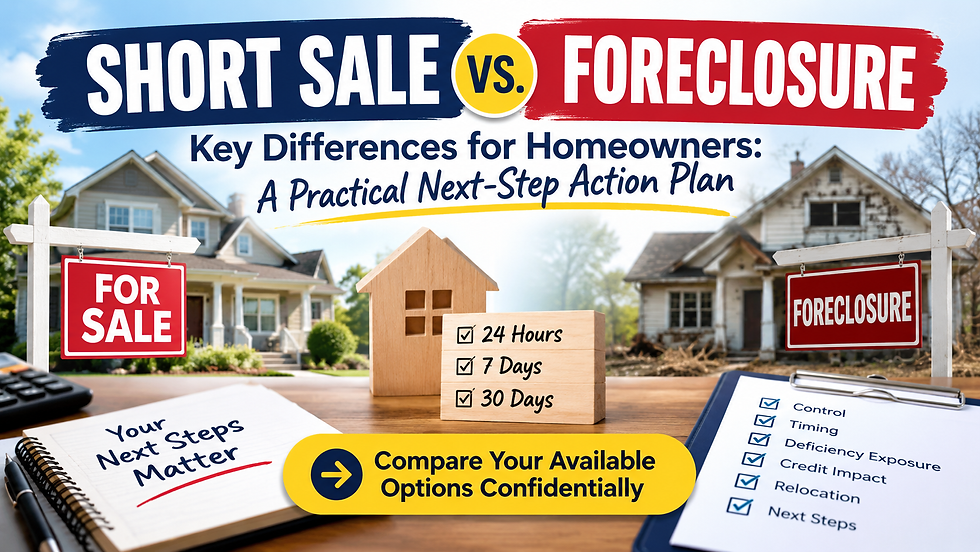
Short Sale vs. Foreclosure: Key Differences for Homeowners: A Practical Next-Step Action Plan
What Should a Homeowner Do Next?
If you are comparing a short sale vs. foreclosure, start by gathering your mortgage information, contacting your mortgage servicer, and understanding the alternatives available to you. A short sale may allow a homeowner to sell the property for less than the mortgage balance if the lender or servicer approves the transaction. Foreclosure is a legal process through which a lender seeks to recover the debt through the property. The right next step depends on your financial situation, timeline, loan terms, property value, and available alternatives. The Consumer Financial Protection Bureau recommends contacting your servicer as soon as possible and considering help from a HUD-approved housing counselor.
Short Sale vs. Foreclosure: Why the Next Steps Matter
When mortgage payments become difficult, waiting can make the situation harder to understand and manage. Homeowners may hear terms such as short sale, foreclosure, loan modification, forbearance, repayment plan, and deed-in-lieu of foreclosure without knowing which options may apply.
The goal is not to choose an option based on a general promise that one will always be better.
Instead, the goal is to understand:
How much you owe
What your home may be worth
Whether you can continue making payments
How much time you may have
What your mortgage servicer requires
Whether you may have liability for a remaining balance
How the decision could affect future housing plans
Whether legal or tax advice is appropriate
The CFPB notes that homeowners who cannot make mortgage payments may have several potential options, including loan modification, repayment plans, forbearance, short sale, and deed-in-lieu of foreclosure.
Short Sale vs. Foreclosure: The Key Differences
Before deciding what to do, understand the basic distinction.
Short Sale
A short sale generally involves selling the home for less than the amount owed on the mortgage, with approval from the lender or mortgage servicer.
The CFPB explains that a short sale is a type of loss mitigation and an alternative to foreclosure. Because it involves selling the property, the homeowner generally leaves the home after the sale.
A short sale can involve several steps:
Reviewing the homeowner's financial hardship
Determining the property's market value
Preparing the property for sale
Marketing the property
Receiving an offer
Submitting the required documentation
Obtaining lender or servicer approval
Completing the sale if approved
A short sale is not automatically approved simply because the property is worth less than the mortgage balance.
Foreclosure
Foreclosure is a legal process used to enforce a lender's rights when a mortgage obligation is not being paid according to its terms.
The timeline and procedures can vary depending on the mortgage, applicable law, and circumstances.
For that reason, homeowners should not assume they know how much time they have based only on information found online.
If you have received legal papers, a foreclosure notice, or another formal deadline, consider speaking with a qualified attorney promptly. The CFPB specifically notes that homeowners facing imminent foreclosure or legal papers may need legal assistance.
The 24-Hour Action Plan: What to Do First
The first 24 hours should focus on information, communication, and deadlines.
1. Contact Your Mortgage Servicer
Call the company listed on your mortgage statement and explain your situation.
Be prepared to discuss:
Why payments have become difficult
Whether the hardship is temporary or ongoing
Your income
Your expenses
Your mortgage balance
Whether you have missed payments
Any notices or deadlines you have received
The CFPB recommends contacting the mortgage servicer right away rather than waiting for the situation to progress.
2. Gather Your Mortgage Documents
Create one folder containing:
Recent mortgage statements
Loan information
Property tax information
Homeowners insurance information
Income documentation
Bank statements
Monthly expense information
Any foreclosure notices
Letters from your lender or servicer
Previous loss-mitigation documents
Having these documents organized can make conversations with professionals much easier.
3. Write Down Every Deadline
Do not rely on memory.
Create a simple timeline showing:
Payment due dates
Missed-payment dates
Servicer response deadlines
Foreclosure-related notices
Court dates, if applicable
Listing or offer deadlines
Any dates given by the lender or servicer
A missed deadline can affect the options available to you, so confirm important dates directly with the appropriate professional.
The 7-Day Action Plan: Compare Your Options
During the next week, move from gathering information to comparing possible paths.
Step 1: Determine Whether Selling Is Realistic
Find out what your property could reasonably sell for in the current market.
Compare the estimated value with:
Mortgage balance
Other liens
Selling costs
Taxes or assessments
Potential transaction expenses
If the expected sale proceeds are not enough to satisfy the mortgage debt and other required costs, a standard sale may not solve the problem.
That is one circumstance in which a short sale may need to be evaluated.
Step 2: Ask About Loss-Mitigation Options
Do not assume that short sale or foreclosure are your only choices.
Depending on the circumstances and loan type, potential alternatives may include:
Forbearance
Repayment plan
Loan modification
Short sale
Deed-in-lieu of foreclosure
HUD's FHA loss-mitigation guidance describes both home-retention and home-disposition options for eligible borrowers experiencing financial hardship.
Step 3: Ask About Deficiency Liability
One of the most important short sale vs foreclosure next steps is determining what happens if the property does not cover the entire mortgage debt.
A deficiency is generally the difference between what is owed and what is recovered through a transaction or enforcement process.
The treatment of deficiencies can depend on the circumstances and applicable law. The CFPB specifically recommends asking whether a lender will waive a deficiency in connection with a short sale and obtaining any waiver in writing.
Do not assume that a short sale automatically eliminates the remaining debt.
Ask:
"If the sale is approved, will the remaining deficiency be waived, and will that waiver be provided in writing?"
Because deficiency rules can involve legal issues, professional legal advice may be appropriate.
The 30-Day Action Plan: Move From Options to a Decision
By the 30-day point, the objective should be to have a clearer picture of your available options and the requirements attached to each one.
Compare Control and Timing
A homeowner considering a short sale may have an opportunity to market the property and work toward a buyer-supported transaction.
Foreclosure follows a legal process controlled largely by the lender, servicer, and applicable procedures.
Neither path should be assumed to follow one universal timeline.
Ask:
What deadline applies to me?
What happens if I do nothing?
How long could a short sale take?
What must be submitted for approval?
What happens if the lender rejects an offer?
Are there alternatives that could keep me in the home?
Consider Credit Impact Carefully
Credit consequences are important, but they should not be reduced to one universal score or number.
The impact can vary depending on factors such as:
Payment history
Delinquency status
How the account is reported
Whether foreclosure occurs
Other debts
The timing of future credit applications
The specific loan and reporting circumstances
Therefore, be cautious of anyone promising that a particular option will produce a specific credit-score result.
Plan for Relocation Early
A short sale generally involves selling the property, which means homeowners should think ahead about where they will live after closing.
Questions may include:
When would possession need to be transferred?
What housing costs can you realistically afford?
Will you need temporary housing?
Are relocation assistance programs available?
What expenses should be included in your moving budget?
The CFPB notes that homeowners pursuing short sales can ask about possible relocation assistance, including programs sometimes referred to as "cash-for-keys." Availability and eligibility vary.
What Documents Should You Prepare?
A short sale or other loss-mitigation review may require detailed financial documentation.
Depending on the circumstances, you may be asked for:
Mortgage statements
Pay stubs
Tax returns
Bank statements
Employment information
Monthly expenses
Hardship explanation
Property information
Listing information
Purchase offers
Other loan or lien information
Keep copies of everything submitted.
Also keep a record of:
Who you spoke with
Dates of calls
Reference numbers
Documents submitted
Deadlines provided
Decisions received
Good documentation can help you track the process and identify unanswered questions.
When Should You Talk to an Attorney or Housing Counselor?
Not every mortgage problem requires an attorney, but certain situations deserve professional guidance.
Consider seeking legal advice if:
You have received legal papers
You are facing a foreclosure deadline
You are unsure about deficiency liability
There are multiple liens
Ownership of the property is complicated
You are being asked to sign documents you do not understand
You have questions about bankruptcy
You have tax-related concerns
A HUD-approved housing counselor can also help homeowners understand available foreclosure-avoidance options. The CFPB directs homeowners to HUD-approved counseling resources for assistance.
Avoid Mortgage Relief Scams
Financial hardship can make homeowners vulnerable to aggressive or misleading offers.
Be cautious if someone:
Guarantees they can stop foreclosure
Demands a large upfront payment
Tells you to stop communicating with your lender
Tells you to send mortgage payments to them
Pressures you to sign documents immediately
Asks you to transfer your deed
Claims to be affiliated with the government without verification
The Federal Trade Commission warns that mortgage-relief scammers often target homeowners facing foreclosure and may demand upfront payments or encourage homeowners to transfer their property.
The CFPB similarly warns homeowners about companies that guarantee they can prevent foreclosure or require questionable payments.
Short Sale vs. Foreclosure Next Steps Checklist
Use this checklist as a starting point:
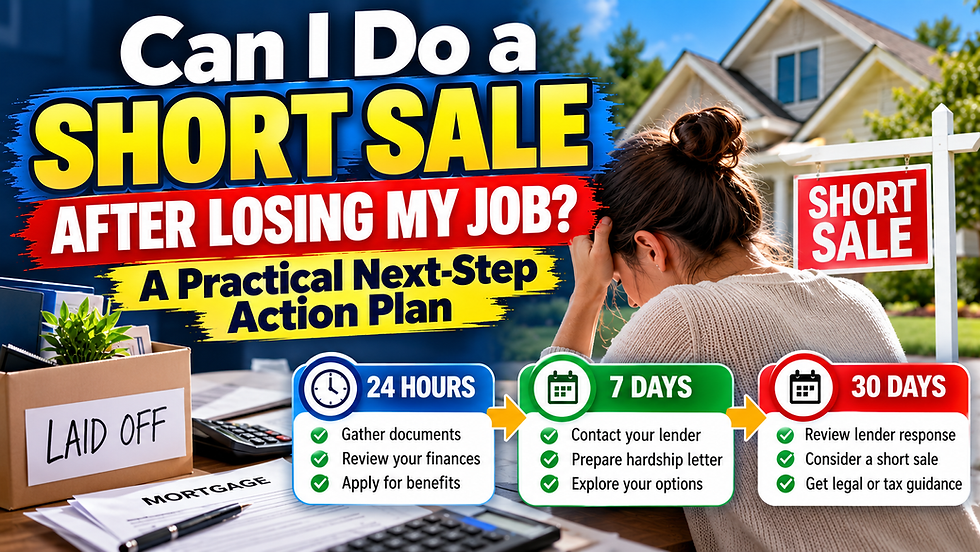
Within 24 Hours
☐ Contact your mortgage servicer☐ Gather mortgage and financial documents☐ Identify every known deadline☐ Determine whether payments are current or delinquent☐ Ask what loss-mitigation options may be available
Within 7 Days
☐ Estimate your home's current market value☐ Compare the value with your mortgage balance☐ Ask whether a short sale is possible☐ Ask about deficiency treatment☐ Explore alternatives to foreclosure☐ Contact a HUD-approved housing counselor if needed☐ Seek legal advice if legal papers or complex issues are involved
Within 30 Days
☐ Compare the available options☐ Understand the requirements for each option☐ Evaluate timing and relocation considerations☐ Review potential credit consequences☐ Keep written records of communications☐ Make decisions based on documented information rather than promises
Frequently Asked Questions
1. What should a homeowner do next if they cannot afford the mortgage?
Contact the mortgage servicer as soon as possible and ask about available loss-mitigation options. A HUD-approved housing counselor can also help explain potential alternatives.
2. Is a short sale better than foreclosure?
There is no universal answer. A short sale and foreclosure involve different processes, timelines, risks, and potential consequences. The appropriate option depends on the homeowner's financial circumstances, property value, loan terms, and applicable law.
3. Does a short sale eliminate the remaining mortgage debt?
Not necessarily. If the home sells for less than the mortgage balance, ask the lender or servicer how the remaining balance will be handled. The CFPB recommends asking whether a deficiency will be waived and getting any waiver in writing.
4. How quickly should I contact my mortgage servicer?
As soon as you know you may have difficulty making your payments. The CFPB recommends contacting the servicer right away rather than waiting for the situation to become more serious.
5. Will a short sale hurt my credit?
A short sale can have credit consequences, but the impact varies based on the homeowner's payment history, account reporting, delinquency status, and other circumstances. No responsible professional should guarantee a specific credit-score outcome.
6. What if I have already received foreclosure papers?
Do not ignore them. Review the documents carefully, confirm all deadlines, contact your mortgage servicer, and consider consulting a qualified attorney. The CFPB notes that homeowners who have received legal papers may need legal assistance.
7. Where can I get help comparing my options?
A mortgage servicer can explain available programs for the specific loan. A HUD-approved housing counselor can also provide assistance with understanding foreclosure-avoidance options.
The Bottom Line: Start With Information, Not Pressure
When comparing short sale vs. foreclosure next steps, the most important thing is to act early and gather reliable information.
Start with your mortgage servicer. Organize your financial documents. Understand your property's potential market value. Ask about alternatives. Find out how deficiency liability could be handled. Consider the timing, credit implications, and relocation requirements. And when legal or tax questions arise, seek advice from the appropriate licensed professional.
A short sale may be an option for some homeowners, while others may qualify for a loan modification, repayment plan, forbearance, deed-in-lieu, or another solution. There is no single path that works for everyone.
The objective is to understand your available choices before a deadline limits them.
Compare Your Available Options Confidentially
If you are weighing a short sale, foreclosure, or another path, compare your available options confidentially before making a decision.
Get the information you need to understand your situation, the potential next steps, and the questions you should be asking your mortgage servicer and other qualified professionals.
Important: This article provides general educational information and is not legal, tax, financial, or mortgage-servicing advice. Short-sale and foreclosure rules, procedures, timelines, deficiency liability, credit reporting, and available programs can vary based on individual circumstances and applicable law. No particular outcome is guaranteed.


Comments