Who Qualifies for a Short Sale? Common Requirements and Hardships: 7 Questions Homeowners Ask

Who Qualifies for a Short Sale?
A homeowner may qualify for a short sale when the property’s value is insufficient to cover the mortgage debt and the homeowner has circumstances that make keeping the mortgage difficult. Common factors can include negative equity, financial hardship, income changes, unaffordable expenses, and the lender’s willingness to approve a sale for less than the amount owed. However, there is no single qualification that guarantees approval. The mortgage servicer or lender reviews the homeowner’s financial situation, property information, documentation, and proposed transaction on a case-by-case basis. The Consumer Financial Protection Bureau (CFPB) defines a short sale as selling a home for less than the mortgage balance with the lender or servicer’s agreement.
If you are researching short sale qualifications questions, understanding these factors can help you prepare before contacting your lender or making a decision.
1. What Is a Short Sale?
A short sale is a type of loss mitigation in which a home is sold for less than the amount owed on the mortgage.
For example, imagine a homeowner owes $350,000 on a mortgage, but the property’s current market value may be approximately $285,000. After considering the mortgage balance and transaction costs, there may not be enough proceeds from the sale to fully satisfy the debt.
The lender or mortgage servicer must generally agree to the proposed short sale.
A short sale is different from simply selling a home at a lower price. If the proceeds are insufficient to satisfy the mortgage, the lender’s approval becomes an important part of the transaction. The CFPB identifies a short sale as one potential alternative to foreclosure for homeowners experiencing mortgage difficulties.
2. Does Negative Equity Mean I Qualify for a Short Sale?
Not necessarily.
Negative equity means a homeowner owes more on a property than its current market value. It can be an important factor in determining whether a short sale should be considered, but negative equity by itself does not automatically qualify a homeowner.
The lender may also examine:
Current mortgage balance
Property value
Selling costs
Financial hardship
Income
Monthly expenses
Assets
Payment history
Other liens or loans
Proposed sale price
Available alternatives
A homeowner should avoid assuming that an online property estimate is the same as the value a lender will use during its review.
The actual valuation may depend on the property, market, transaction, and lender requirements.
3. What Financial Hardships May Be Considered?
Financial hardship is another important topic among short sale qualifications questions.
A hardship is generally a circumstance that affects a homeowner’s ability to maintain the mortgage or otherwise keep the property.
Examples can include:
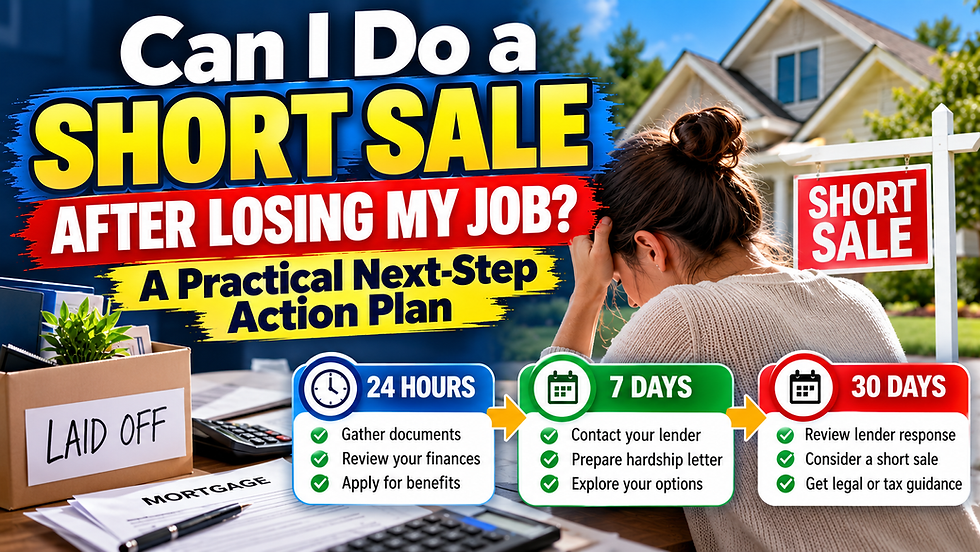
Loss of employment
Reduced income
Reduced work hours
Significant unexpected expenses
Major medical expenses
Divorce or separation
Death of a household income contributor
Relocation
Changes in self-employment or business income
Other significant changes in financial circumstances
The CFPB advises homeowners who are struggling with mortgage payments to contact their mortgage servicer promptly and be prepared to explain their income, expenses, assets, and the reason they are having difficulty making payments.
The important point is documentation.
If a homeowner says income decreased, for example, supporting records may help explain when the change occurred and how it affected the ability to make mortgage payments.
4. What Documents May I Need for a Short Sale?
There is no single universal document package for every short sale. Requirements can vary by lender, servicer, loan, and individual circumstances.
A homeowner should begin organizing:
Mortgage Documents
Current mortgage statement
Loan number
Current balance
Monthly payment
Payment history
Lender or servicer contact information
Information about additional mortgages or liens
Income Documents
Depending on the situation, these may include:
Recent pay stubs
W-2 forms
Tax returns
Bank statements
Benefit statements
Self-employment income records
Profit-and-loss statements
Other income documentation
Expense Information
Prepare a realistic list of recurring expenses, including:
Housing costs
Utilities
Insurance
Transportation
Medical expenses
Credit obligations
Childcare or support expenses
Other regular financial obligations
Hardship Documentation
Keep records that help establish what changed and when.
This could include employment documents, income-change records, major expense documentation, or other evidence related to the hardship.
The CFPB recommends being prepared to provide information about income, expenses, assets, and the circumstances affecting the ability to make mortgage payments.
5. Does the Lender Have to Approve the Short Sale?
The lender or mortgage servicer generally plays a central role in approving a short sale because the proposed transaction may result in the mortgage being paid with proceeds that are less than the amount owed.
That means finding a buyer does not necessarily mean the short sale is approved.
The lender may review:
The proposed purchase price
Property value
Mortgage balance
Financial hardship
Supporting documents
Closing costs
Other liens
Loan or investor requirements
The CFPB explains that a short sale requires the lender or servicer to agree to the transaction.
Because approval is case-specific, homeowners should avoid claims that a particular set of circumstances automatically guarantees approval.
6. What Happens to the Remaining Mortgage Debt?
This is one of the most important short sale qualifications questions to ask before accepting a short sale.
The difference between the mortgage balance and the amount paid through the transaction may be called a deficiency.
What happens to that amount can depend on the loan documents, lender approval, applicable law, and the specific terms of the short-sale agreement.
The CFPB specifically advises homeowners to ask whether the lender will waive any deficiency and, when a waiver is provided, to obtain it in writing and keep the documentation.
This is an area where legal guidance may be appropriate, particularly if a homeowner wants to understand potential personal liability after the transaction.
Do not assume that completing a short sale automatically eliminates every possible obligation.
7. Can a Short Sale Have Tax Consequences?
Potentially, yes.
Canceled or forgiven debt can have federal tax consequences depending on the circumstances. The IRS states that canceled debt is generally taxable income unless an exception or exclusion applies.
Tax treatment can depend on factors such as:
Whether the homeowner was personally liable for the debt
Whether the debt was recourse or nonrecourse
Whether an exception or exclusion applies
Whether the property was a principal residence
The date and circumstances of the debt cancellation
The homeowner’s overall financial situation
Tax rules can also change over time. For example, the IRS currently explains that the federal exclusion for certain qualified principal residence indebtedness generally applied to qualifying discharges before January 1, 2026, or certain written arrangements entered into before that date.
Because tax treatment is highly fact-specific, homeowners should discuss potential consequences with a qualified tax professional before relying on assumptions about canceled mortgage debt.
What Should a Homeowner Prepare Before Asking About a Short Sale?
Before taking the next step, organize five categories of information.
1. Property Information
Know:
Estimated property value
Mortgage balance
Property condition
Needed repairs
Current listing or sale information
Other loans or liens
2. Financial Information
Gather:
Income records
Bank statements
Monthly expenses
Asset information
Mortgage statements
Payment history
3. Hardship Information
Write down:
What changed
When it changed
How it affected your finances
What documentation supports the explanation
4. Important Dates
Track:
Mortgage payment due dates
Missed-payment dates
Lender correspondence
Any foreclosure-related deadlines
Listing dates
Offer dates
Requested document deadlines
5. Questions for Professionals
Prepare questions about:
Eligibility
Required documents
Lender review
Other liens
Deficiency liability
Tax consequences
Alternatives to a short sale
Important deadlines
The CFPB recommends contacting the mortgage servicer promptly when a homeowner is struggling with mortgage payments and also points homeowners toward HUD-approved housing counseling resources.
When Should You Talk to a Lawyer, Tax Professional, or Lender?
Different questions may require different professionals.
Talk to the Mortgage Servicer About:
Short-sale requirements
Required documentation
Loan status
Review procedures
Deadlines
Other available loss-mitigation options
Consider Legal Guidance About:
Potential deficiency liability
The terms of a short-sale approval
Other liens
Legal notices
Foreclosure proceedings
Contract or liability questions
If foreclosure is imminent or you have received legal papers, the CFPB says you may need to consult an attorney.
Consider Tax Guidance About:
Canceled mortgage debt
Possible taxable income
Form 1099-C
Form 982
The tax treatment of the property sale
The IRS explains that canceled debt can be taxable and that specific exceptions and exclusions may apply.
7 Short Sale Qualifications Questions to Ask
Here is a quick version homeowners can save:
Who qualifies for a short sale?
Does my home have enough negative equity to consider a short sale?
Does my financial hardship meet my lender’s requirements?
What documents does my lender require?
Will the lender review my income, expenses, and assets?
What happens to any remaining mortgage debt?
Could the transaction create legal or tax consequences for me?
These questions can help a homeowner identify what information is still missing before beginning a lender review.
Frequently Asked Questions About Short Sale Qualifications
What is the biggest factor in qualifying for a short sale?
There is no single factor that determines qualification. Negative equity, financial hardship, property value, mortgage information, documentation, and the lender’s requirements may all be relevant.
Can I qualify for a short sale if I am current on my mortgage?
Possibly. A homeowner should not assume that being current automatically rules out a short sale or guarantees eligibility. The lender or servicer will evaluate the specific circumstances.
Do I need a financial hardship to request a short sale?
Hardship can be an important part of the review, but requirements vary. Contacting the mortgage servicer can help clarify what documentation and circumstances it considers.
Does owing more than my home is worth automatically qualify me?
No. Negative equity can be relevant, but it does not by itself guarantee short-sale approval.
Can I sell my house for less than the mortgage without lender approval?
If the proposed sale proceeds will not fully satisfy the mortgage debt, lender or servicer approval is generally a critical part of a short sale. The CFPB describes a short sale as a sale for less than the mortgage balance with the lender or servicer’s agreement.
Will I still owe money after a short sale?
Potentially. The treatment of a deficiency depends on the circumstances and the terms of the approved transaction. Ask whether any remaining balance will be waived and obtain any waiver in writing.
Should I talk to a tax professional before a short sale?
If debt may be forgiven or canceled, discussing the potential tax consequences with a qualified tax professional can be important. The IRS states that canceled debt may generally be taxable unless an applicable exception or exclusion applies.
Check Your Likely Eligibility
If you are trying to determine whether a short sale may be an option, start with the facts: your mortgage balance, current property value, financial hardship, income, expenses, assets, payment history, and other liens.
There is no guarantee that a particular situation will qualify or that a lender will approve a proposed short sale. However, gathering accurate information can help you have a more productive conversation with your mortgage servicer and the professionals assisting with your situation.
Check Your Likely Eligibility
Review your current mortgage position, property value, hardship, and financial information to understand whether your circumstances may warrant further short-sale review.
This article is for general educational purposes only and is not legal, tax, financial, mortgage-servicing, or lender-specific advice. Short-sale requirements, deficiency rules, tax treatment, and lender procedures can vary. Consult the appropriate qualified professional regarding your individual circumstances.
Authoritative Sources
Consumer Financial Protection Bureau — Short sales and mortgage hardship options.
Internal Revenue Service — Canceled debt and tax treatment.


Comments