Who Qualifies for a Short Sale? Common Requirements and Hardships: Documents and Information to Prepare
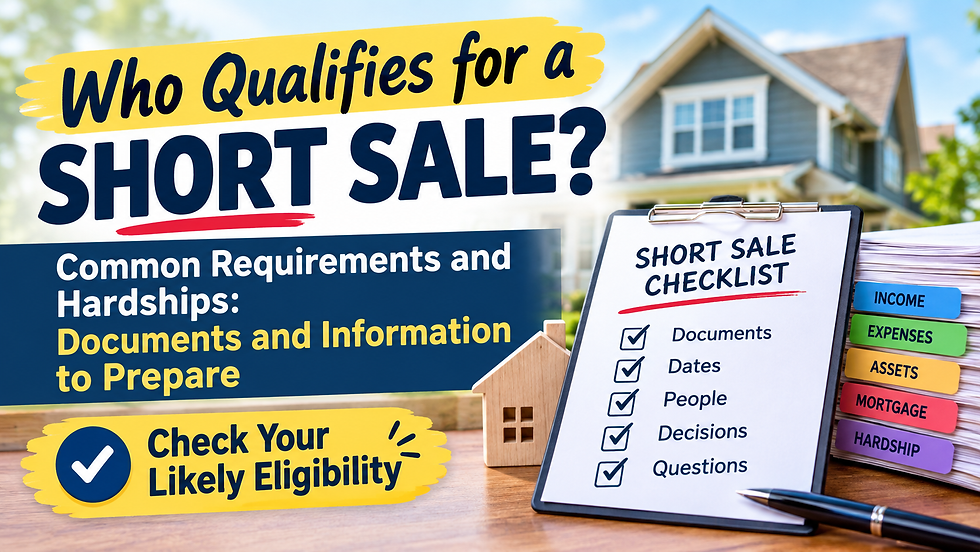
If you are wondering who qualifies for a short sale, start by gathering information about your home’s value, mortgage balance, financial hardship, income, expenses, assets, and loan status. A typical short sale qualifications checklist includes financial documents, hardship information, property details, mortgage statements, important dates, and questions for your lender and real estate professional. A short sale generally involves selling a home for less than the amount owed on the mortgage, with the lender or other lienholder reviewing and approving the proposed transaction. Eligibility and approval are case-specific, so preparing complete and accurate information is an important first step.
What Is a Short Sale?
A short sale occurs when a home is sold for less than the outstanding mortgage debt and the lender agrees to accept the proceeds from the sale according to the terms of its approval.
One common reason a homeowner considers a short sale is negative equity. This means the amount owed on the property may be greater than its current market value.
For example, if a homeowner owes $300,000 on a mortgage but the property may currently sell for approximately $250,000, there could be a $50,000 gap before considering selling expenses and other obligations.
Negative equity alone, however, does not automatically mean a homeowner qualifies.
The lender may also consider the homeowner’s financial circumstances, hardship, property value, loan information, available assets, and other factors.
The Consumer Financial Protection Bureau recommends contacting the mortgage servicer promptly when a homeowner is having difficulty making mortgage payments and being prepared to explain the circumstances, income, expenses, and assets involved.
Short Sale Qualifications Checklist: Start With the Financial Picture
Before taking the next step, organize the information that helps explain your current financial situation.
1. Mortgage and Loan Information
Gather:
Most recent mortgage statement
Current loan balance
Monthly mortgage payment
Loan number
Mortgage servicer's name and contact information
Information about past-due payments
Notices received from the lender
Information about second mortgages or home equity loans
Any available information about other liens
If there is more than one lien against the property, identify each one. Different creditors may have different requirements before a sale can move forward.
2. Current Property Value
The lender will generally need information about the property's current market value as part of its review.
Prepare:
Property address
Approximate current market value
Recent comparable sales, if available
Information about needed repairs
Photos or records documenting significant property conditions
Recent appraisal or valuation information, if available
A homeowner should not assume that an online estimate represents the value the lender will use.
The actual valuation and lender review can depend on the specific property, transaction, market conditions, and lender requirements.
What Financial Hardship Information Should You Prepare?
Financial hardship is another important part of many short sale reviews.
A hardship may involve a significant change that makes keeping up with the mortgage difficult. Circumstances can vary and may include:
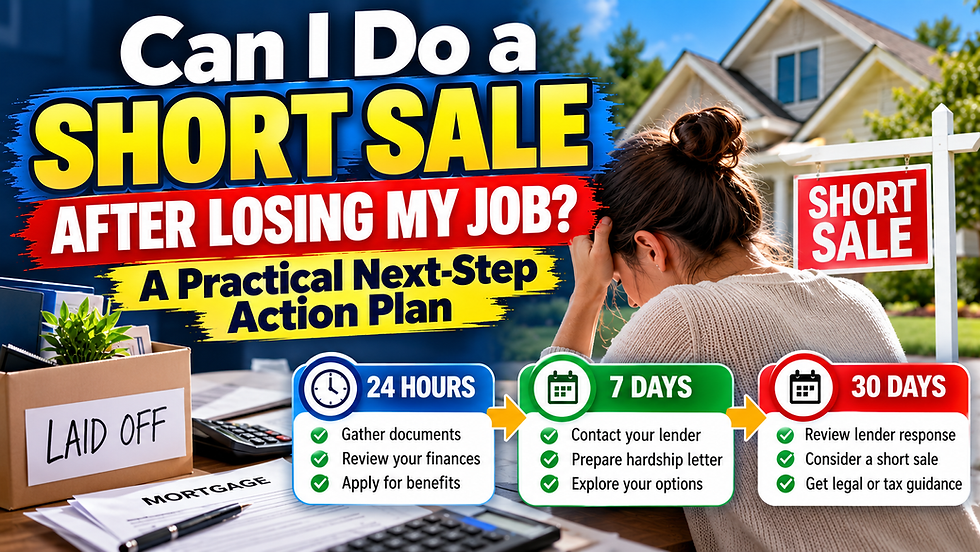
Job loss or reduced income
Major reduction in working hours
Significant increase in expenses
Divorce or separation
Death of a household income contributor
Serious unexpected expenses
Relocation
Business or self-employment income changes
Other substantial financial changes
The key is to document what happened and how it affected the ability to maintain the mortgage.
A hardship letter may be requested as part of the lender's review. Keep the explanation factual, clear, and consistent with the supporting documents.
Avoid exaggerating circumstances or leaving out important financial information.
Documents to Include in Your Short Sale Preparation Checklist
Requirements can vary by lender and loan situation, but homeowners may be asked for documents such as:
Income Documentation
Depending on the circumstances, this could include:
Recent pay stubs
W-2 forms
Tax returns
Bank statements
Profit-and-loss statements for self-employed borrowers
Documentation of other income
Benefit statements
Other evidence of current income
The CFPB notes that lenders may request financial information and supporting documents to verify information provided by a borrower.
Expense Documentation
Prepare a realistic list of monthly expenses, such as:
Mortgage payment
Utilities
Insurance
Property taxes
Transportation
Medical expenses
Credit obligations
Childcare or support obligations
Other recurring expenses
The goal is to provide an accurate picture of the financial circumstances—not to create a more favorable version of them.
Asset Information
You may also need information about:
Checking accounts
Savings accounts
Investment accounts
Retirement accounts
Vehicles
Other real estate
Business interests
Other significant assets
Do not assume an asset is irrelevant simply because it is not connected to the property. Ask the lender or qualified professional what must be disclosed.
Important Dates to Put on Your Checklist
Timing matters when dealing with mortgage hardship.
Write down:
Date the financial hardship began
Date income changed
Date the first missed payment occurred, if applicable
Current mortgage payment due date
Dates of lender communications
Dates of foreclosure-related notices, if any
Listing date, if the property is already listed
Offer date, if an offer has been received
Any lender response deadlines
Any scheduled legal or foreclosure dates
Keep copies of notices, emails, letters, and other communications.
If the homeowner is already facing a deadline, contact the mortgage servicer promptly rather than waiting until the deadline is close. The CFPB specifically advises borrowers who are struggling with mortgage payments to contact their servicer as soon as possible.
People to Identify Before Taking the Next Step
A short sale can involve several parties.
Depending on the situation, these may include:
Homeowner
Mortgage servicer
Mortgage lender or investor
Real estate professional
Buyer
Title or escrow company
Attorney
Tax professional
Housing counselor
Other lienholders
Knowing who is responsible for each part of the process can help reduce confusion.
For example, a real estate professional may help with the property sale and offer, while the mortgage servicer handles the lender's review. An attorney or tax professional may be appropriate when legal or tax questions arise.
Questions to Ask Before Starting a Short Sale
Use these questions as part of your short sale qualifications checklist:
Does my current mortgage balance appear to exceed the property's market value?
What documentation does my mortgage servicer require?
How does the lender evaluate financial hardship?
Are there other liens or loans that must be addressed?
What happens to any remaining debt after the sale?
What deadlines should I be aware of?
What tax or legal questions should I discuss with a qualified professional?
What happens if the lender does not approve the proposed sale?
What alternatives should I consider before making a decision?
Who will communicate with the lender during the process?
These questions can help homeowners understand the process before committing to a particular path.
Why Short Sale Approval Is Case-Specific
There is no universal checklist that guarantees short sale approval.
A lender may evaluate the overall circumstances, including the property's value, mortgage balance, financial hardship, documentation, proposed sale, and other relevant information.
The presence of negative equity does not automatically guarantee approval.
Likewise, experiencing financial hardship does not necessarily mean a short sale will be approved.
The lender's requirements can differ depending on the loan, investor, servicer, lien position, and individual circumstances.
That is why complete documentation matters.
If information is missing or inconsistent, the lender may request additional documentation before completing its review. The CFPB recommends keeping originals, submitting copies as instructed, confirming receipt, and responding promptly to requests for additional information.
What About Taxes and Remaining Mortgage Debt?
Homeowners should not assume that a short sale automatically eliminates every potential financial obligation.
The tax treatment of canceled debt can depend on the circumstances. The IRS explains that canceled debt may be taxable income in some situations, while exceptions or exclusions may apply in others.
The IRS also specifically recognizes short sales as a type of transaction that can result in a discharge of indebtedness.
Because tax rules can change and individual circumstances differ, homeowners should consult a qualified tax professional about their specific situation.
Legal questions about liability for remaining debt should likewise be addressed with a qualified attorney.
Your Short Sale Qualifications Checklist
Before taking the next step, use this practical checklist:
Property
Property address
Estimated current market value
Mortgage balance
Property condition
Repair information
Other liens or loans
Financial Situation
Current income
Recent income documents
Monthly expenses
Bank statements
Asset information
Mortgage payment history
Hardship
Date hardship began
Explanation of hardship
Supporting documentation
Information about changes in income or expenses
Timeline
Payment due dates
Missed-payment dates
Lender notices
Important deadlines
Foreclosure-related dates, if applicable
People
Mortgage servicer
Real estate professional
Housing counselor, if appropriate
Attorney, if needed
Tax professional, if needed
Questions
What documents are required?
Does the lender consider my circumstances?
What happens to remaining debt?
What deadlines apply?
What alternatives are available?
Frequently Asked Questions About Short Sale Qualifications
1. Who qualifies for a short sale?
Qualification depends on the homeowner's circumstances and the lender's review. Negative equity and financial hardship may be relevant, but neither one by itself guarantees approval.
2. What is the most important document for a short sale?
There is not one universal document that determines eligibility. Lenders may request mortgage information, income records, bank statements, expense information, hardship documentation, and property-related information.
3. Does financial hardship automatically qualify me for a short sale?
No. Financial hardship can be an important part of the review, but the lender may consider the complete financial and property situation.
4. Do I need to prove that I owe more than my home is worth?
Negative equity can be an important factor. The lender may use its own valuation or other information when reviewing the proposed transaction.
5. What if I have a second mortgage or another lien?
Tell the professionals handling the transaction about all known liens. Additional lienholders may need to participate in or approve the transaction.
6. Can a short sale affect taxes?
Potentially. Canceled mortgage debt can have tax consequences depending on the circumstances. The IRS provides guidance on canceled debt and recommends considering the applicable exceptions and exclusions.
7. What should a homeowner prepare before taking the next step?
Prepare your mortgage information, property value information, income and expense records, asset information, hardship documentation, important dates, and questions for the mortgage servicer and professionals involved.
Take the Next Step With Better Information
A short sale is a lender-reviewed transaction, and every homeowner's circumstances are different. The best preparation is to understand the numbers, document the hardship accurately, identify important deadlines, and gather the information needed for a lender review.
If you are unsure whether your situation may meet common short sale requirements, start with the facts you already have and organize them before making major decisions.
Check Your Likely Eligibility
Check your likely eligibility by reviewing your mortgage balance, estimated property value, financial hardship, income, expenses, assets, and current loan status.
Getting organized does not guarantee approval, but it can help you have a more informed conversation about your available options.
This article provides general educational information and is not legal, tax, financial, or lender-specific advice. Short sale requirements and approval criteria can vary. Consult the appropriate qualified professionals regarding your circumstances.


Comments